
When someone searches for your products or services online, you have only two ways to appear on Google: you either earn your visibility (SEO) or you pay for visibility (SEM).
Both strategies matter.
Both help your business get discovered.
But they work in completely different ways, when AI-driven search, zero-click answers, and increasingly competitive SERPs have transformed how people interact with Google.
For small businesses, the choice between SEO vs SEM can feel overwhelming.
Should you invest in long-term organic rankings?
Or pay for immediate visibility with search ads?
Or use both?
This article answers those questions clearly. Let’s break it down.
What Is SEO? (Search Engine Optimization)
SEO is the process of optimizing your website so it ranks higher in organic (non-paid) search results. The central idea of SEO is simple:
The more relevant, trustworthy, and helpful your content is, the higher Google ranks you.
SEO has three major pillars:
1. On-Page SEO
This includes everything you optimize on your website:
- Meta titles and descriptions
- Keyword-aligned headlines
- Internal links
- FAQ sections
- Image alt text
- Content depth and clarity
- AI-friendly summaries
- Topical clusters
On-page SEO tells search engines: This page is the most relevant answer for this search.
2. Off-Page SEO
This focuses on signals outside your website that build trust and authority:
- Backlinks from reputable sites
- Press mentions
- Reviews
- Local citations
- Brand signals
- Social sharing
These signals tell Google: People trust this business.
3. Technical SEO
This ensures your website is easy for search engines to crawl and index:
- Fast loading speed
- Mobile friendly design
- Clean URL structure
- Secure HTTPS
- No broken links
- Schema markup
- Strong Core Web Vitals
Technical SEO is the foundation. Without it, even great content struggles to rank.
What Makes SEO Valuable?
SEO builds:
- Authority
- Credibility
- Long-term compounding traffic
- Lower cost per lead over time
But it takes time, usually 3 to 6 months to see significant results.
What Is SEM? (Search Engine Marketing)
SEM is paid search advertising, primarily through Google Ads, that helps your business appear at the top of search results instantly.
Whenever someone searches for a keyword:
- You bid on that keyword
- Your ad enters Google’s auction
- If your bid + ad quality are competitive
- You appear instantly above organic results
SEM includes:
- Search ads
- Local search ads
- Performance Max campaigns
- Shopping ads
- Remarketing
- Dynamic search ads
How Does SEM Work? (Explained Simply)
When someone types “coffee cafe near me,” Google runs a lightning-fast auction.
Here’s what happens behind the scenes:
- Google scans all advertisers bidding on “coffee cafe near me.”
- Each advertiser has a maximum bid — e.g., $5 per click.
- Google evaluates each ad’s Quality Score (relevance, landing page, expected CTR).
- Google calculates Ad Rank = Bid × Quality Score.
- Ads with the highest Ad Rank appear at the top.
- In a typical PPC campaign (the most common type), the advertiser pays only when someone clicks.
That’s SEM.
How SEM Helps Your SMB
SEM is extremely effective for SMB businesses because it offers:
1. Immediate visibility
You can appear at the top of Google within a day, even if your website is brand new.
2. Highly targeted reach
You can target by:
- ZIP code
- City radius
- Age
- Gender
- Household income
- Device
- Time of day
- Intent
- Keywords
- Audiences
SEO cannot provide this level of detailed targeting.
3. Predictable, measurable results
SEM gives you:
- Cost per click
- Cost per acquisition
- Conversion data
- Keyword level insights
- Audience insights
- ROI
For SMBs, those numbers matter.
4. Faster testing and learning
SEM instantly reveals:
- What messaging works
- What keywords convert
- Which landing pages perform
- Which offers drive sales
5. Control
You can pause, increase, or decrease campaigns at any time.
6. Visibility across AI-driven search
Google’s search interface includes:
- AI Overviews
- Visual results
- Local cards
- Featured snippets
- Ads
- Maps
SEM ensures you appear above all of them.
How Is SEM Different From SEO?
SEM and SEO are both about visibility, but their mechanics, timelines, and costs are completely different.
SEO vs SEM: Key Differences
| Factor | SEO (Search Engine Optimization) | SEM (Search Engine Marketing) |
|---|---|---|
| Cost | No cost per click; cost is content + optimization | Pay per click or impression |
| Speed | Slow (3–6 months) | Instant |
| Longevity | Long-term, compounding | Temporary (stops when ads stop) |
| Targeting | Limited detailed targeting | Highly precise targeting |
| Trust | Very high | Moderate (ads marked “Sponsored”) |
| Control | Low as algorithm decides | High |
| Best For | Sustainable growth | Quick results, urgency, promotions |
| Results Timeline | Long-Term ROI | Faster Results |
SEO & SEM Workflow (Flowchart)
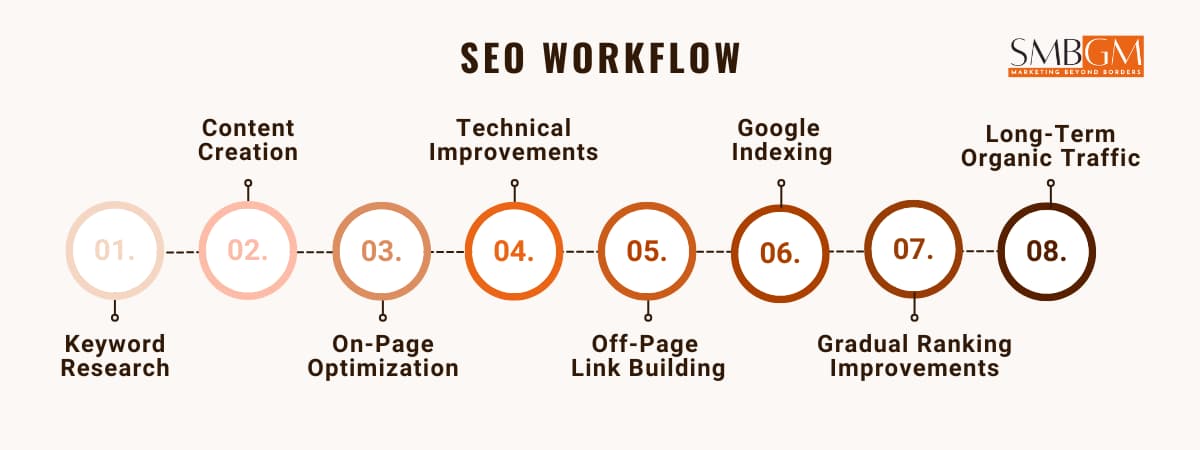
SEO Workflow
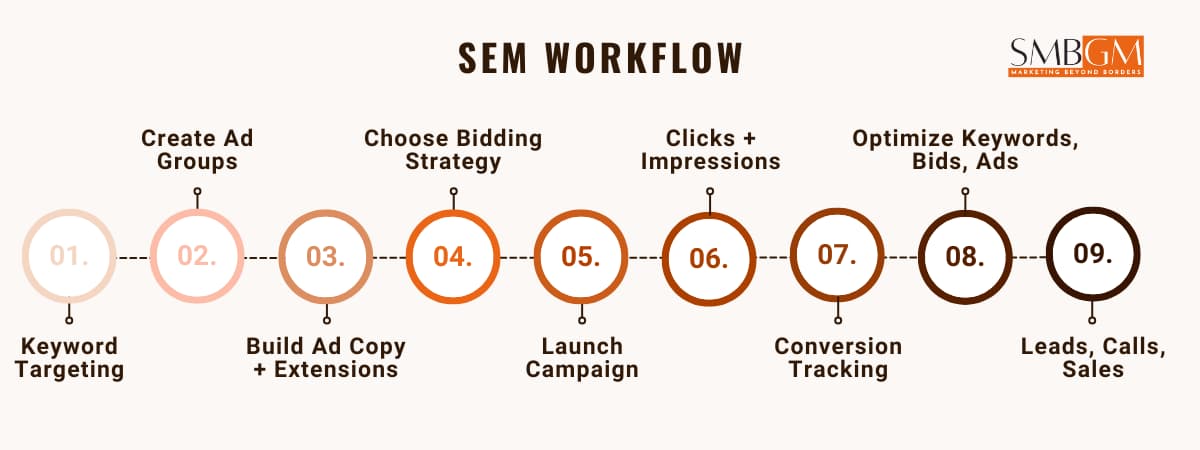
SEM Workflow
How SEO Supports SEM (And Why You Need Both)
SEO and SEM are not competitors, they are partners.
Here’s why combining them is powerful:
1. SEM Data Strengthens SEO
SEM reveals:
- High-conversion keywords
- User intent
- Audience segments
- Effective messaging
Your SEO strategy becomes sharper because you’re using real PPC data instead of guesswork.
2. SEO Improves SEM Performance
A website with:
- Fast speed
- Clear content
- Strong structure
- High relevance
- Better user experience
…automatically earns a higher Quality Score in SEM.
Higher Quality Score = lower cost per click.
3. SEM Fills the Visibility Gap While SEO Grows
SEO requires months.
SEM requires hours.
Running SEM while building SEO ensures:
- Faster leads
- Faster revenue
- Momentum while waiting for organic rankings
4. You Dominate the SERP
When both SEO and SEM rank for the same query:
- You occupy more space
- Competitors get pushed down
- Trust increases
- Click-through rates rise
This “double presence” strategy is what big brands use, and SMBs benefit from it too.
Why SEM Often Outperforms SEO for SMBs
While SEO is essential for long-term growth, SEM wins in several critical areas for small businesses.
1. SEM responds instantly to business needs
If you need leads this week, SEO can’t help you but SEM can.
SEM is the “on-demand traffic driver.”
2. Local businesses depend heavily on SEM
Local searches like:
- “dentist near me”
- “emergency plumber”
- “AC repair now”
…are extremely competitive.
Paid search dominates these queries because people need solutions fast.
3. Google’s interface now prioritizes paid results
A typical search result page shows:
- Performance Max ads
- Google AI Overviews
- Sponsored map listings
- Organic results (with less space than ever)
SEM ensures you stay visible even with shrinking organic space.
4. SEM uses AI to optimize performance
Google’s AI evaluates:
- User behavior
- Search intent
- Click likelihood
- Time-of-day conversion probability
- Page experience
- Device preferences
This results in:
- Better targeting
- Lower cost per lead
- More consistent ROI
How to Do Search Engine Marketing (SEM)
Here is the complete SEM execution framework for SMBs.
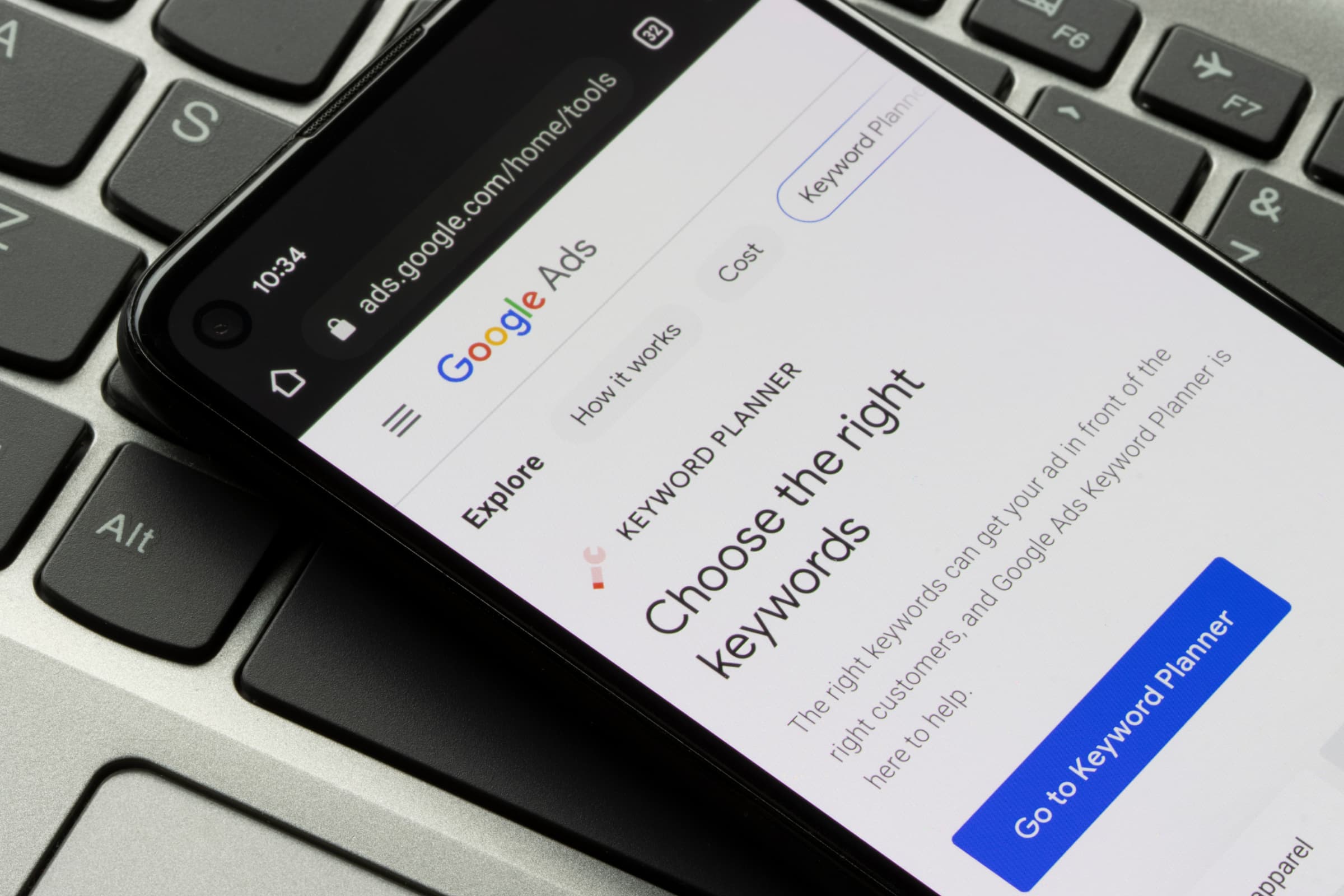
Step 1: Keyword Research
Identify:
- High-intent search terms
- Local keywords (if you’re a local brand)
- Branded keywords
- Negative keywords
Step 2: Structure Campaigns and Ad Groups
Create:
- Campaigns (per service or product category)
- Ad groups (tightly themed)
- Keywords (3 match types)
A clean structure improves Quality Score.
Step 3: Write Strong Ad Copy
Good SEM ad copy includes:
- The keyword
- A clear benefit
- A strong CTA
- Social proof
- Location intent
- Offer or value prop
Example: Same-Day AC Repair | Licensed Technicians | Book Now
Step 4: Add Ad Extensions (Assets)
Google now supports:
- Callouts
- Sitelinks
- Prices
- Promotions
- Phone numbers
- Locations
These increase visibility and CTR.
Step 5: Build High-Converting Landing Pages
Landing pages should be:
- Fast
- Mobile-friendly
- Trust-building
- Clear
- Action-driven
Step 6: Choose Your Bidding Strategy
Google’s AI bidding options include:
- Maximize Conversions
- Target CPA
- Target ROAS
- Maximize Conversion Value
- Maximize Clicks
Choose based on your goal:
- Leads → Target CPA
- Purchases → Target ROAS
- New campaigns → Maximize Conversions
Step 7: Set Up Conversion Tracking
Use:
- GA4
- Enhanced conversions
- UTM parameters
- Phone call tracking
- Form tracking
Without tracking → SEM becomes guesswork.
Step 8: Optimize Continuously
Improve:
- Keywords
- Ads
- Negative keywords
- Landing pages
- Extensions
- Bidding strategy
- Audience targeting
SEM success = constant refinement.
Trends Every Small Business Should Know
Search is changing fast. Here are the trends shaping marketing for SMBs this year:
1. AI Overviews Reduce Organic Clicks
Short, authoritative summaries are crucial. Google increasingly answers queries directly inside AI Overviews, which means fewer users scroll to traditional listings. To stay visible, SMBs should structure content with clear FAQ blocks, and schema that AI can easily extract.
2. Zero-Click Results Are Growing
Users increasingly get answers without clicking any website. This makes brand visibility inside SERP features (Maps, snippets, “People Also Ask,” AI answers) more important than ever. SMBs should optimize for “SERP real estate,” not just rankings — by targeting featured snippets and local pack placement.
3. Performance Max Is Dominating Paid Search
AI allocates budgets across channels for maximum conversions. Performance Max blends Search, Maps, YouTube, Display, and Gmail, meaning your ads show where Google predicts conversion. For SMBs, this reduces manual work but requires strong assets (creative, copy, feeds) and clean conversion tracking to perform well.
4. Privacy Rules Are Reshaping Tracking
GA4 and server-side tracking are essential for accurate measurement. Cookie loss, consent requirements, and attribution gaps are making old-school tracking unreliable. SMBs need to prioritize first-party data (forms, CRM sync, email lists) so marketing performance stays measurable even with privacy limits.
5. Voice Search Continues to Grow
Voice queries are longer and more conversational. SEM helps target high-intent voice searches. People speaking to search don’t use short keywords — they ask full questions like “Who fixes AC near me right now?” SMBs should mirror this language in both SEO content and ad groups, using natural phrasing and local intent terms.
6. Visual Search Adoption Is Rising
Optimize product imagery for search and shopping ads. Google Lens and image-based discovery are becoming mainstream, especially for retail, home services, and lifestyle businesses. SMBs should use high-quality photos, descriptive filenames, alt text, and product schema so images rank and convert.
SEO vs SEM: Which Should You Choose?
Here is the simplest way to decide:
Choose SEO if you want:
- Long-term sustainability
- Brand authority
- Compounding ROI
- Trust-building content
- Evergreen visibility
Choose SEM if you need:
- Immediate leads
- Quick results
- Highly targeted visibility
- Seasonal or promotional campaigns
- Data to guide business decisions
Choose Both if you want:
- Maximum visibility
- Short-term + long-term growth
- Full SERP dominance
- Smarter resource allocation
- Reduced risk
Most SMBs benefit from a combination.
Common Myths (And the Truth)
| Myth | Truth |
| SEO is free | SEO requires time, content, technical fixes, and ongoing optimization. |
| SEM guarantees sales | SEM buys visibility — conversions depend on the full picture: your targeting, offer, messaging, and landing page experience. |
| You only need one | SEO and SEM work better together. |
| SEO and SEM compete | They complement and strengthen each other. |
| SEM is too expensive for small businesses | When optimized, SEM can produce predictable, profitable ROI even with small budgets. |
Final Thoughts
SEO and SEM are two powerful strategies that help small businesses grow in a competitive, AI-driven digital world. While SEO builds authority and sustainability, SEM brings immediate visibility and fast results.
You don’t have to choose one or the other. The smartest growth strategies combine both:
- SEO for long-term, credible visibility
- SEM for instant exposure, targeted reach, and reliable lead generation
A balanced strategy gives your business the strength to compete today — and the authority to grow tomorrow.








 English
 Español