
How Search and Social Work Together — and When to Rely on Each One
In today’s digital landscape, your small business must be visible in two places:
- Where people intentionally search (Google)
- Where people spend their time (social media)
That’s where SEO (Search Engine Optimization) and SMM (Social Media Marketing) come in. They are two of the most powerful ways to attract customers online — but they work very differently, and understanding those differences helps you choose the best strategy for your SMB.
Think of SEO and SMM like two highways leading to your business:
- SEO is the intent highway — customers already know what they want and are searching for it.
- SMM is the attention highway — customers weren’t looking for you, but discover you through content, community, and storytelling.
In 2025, both strategies are more important — and more complex — than ever. Google now includes AI summaries, zero-click results, and dense SERP features, while social media is driven by short-form video, influencers, and fast-moving algorithmic trends.
What Is SEO? (Search Engine Optimization)
SEO is the practice of optimizing your website so it ranks higher in organic search results and brings in free, high-intent traffic from search engines like Google or Bing.
SEO isn’t about “gaming” search engines — it’s about helping Google understand that your website is the most relevant, trustworthy, and helpful answer to what people are looking for.
SEO involves:
- Improving content quality and relevance
- Optimizing on-page elements like meta tags, titles, and headings
- Strengthening technical foundations such as site speed and mobile experience
- Building authority through backlinks and brand mentions
The 3 Pillars of SEO
1. On-Page SEO
This focuses on optimizing content for relevance, clarity, and user experience.
On-page SEO aligns with Google’s E-E-A-T (Experience, Expertise, Authoritativeness, Trustworthiness) guidelines — a key principle in 2025.
2. Technical SEO
This ensures your website is crawlable, indexable, and fast.
Technical SEO is a foundational layer — without it, even the best content struggles to rank.
3. Off-Page SEO
This builds authority outside your website.
Backlinks act as “votes of confidence,” showing Google your content is trustworthy.
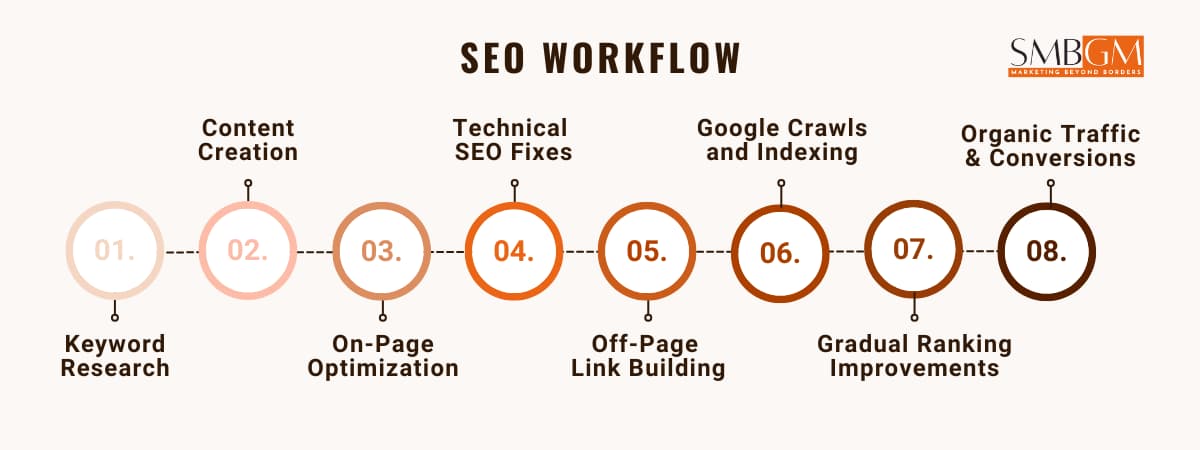
SEO Workflow (Flowchart)
What Is SMM? (Social Media Marketing)
SMM refers to using social media platforms — like Facebook, Instagram, TikTok, LinkedIn, Pinterest, and YouTube — to market your business, build awareness, reach audiences, and drive traffic or conversions.
While SEO targets search intent, SMM targets attention and interest. It meets customers where they already spend their time and builds connection through content, engagement, and paid promotion.
SMM includes:
- Content creation
- Social calendars
- Community engagement
- Influencer marketing
- Social listening and customer service
Social media is increasingly essential for SMBs because it drives brand visibility even when users aren’t searching for you.
How SMM Works
SMM uses a combination of organic and paid strategies to grow visibility.
Organic Social Media Includes:
- Posts (images, videos, carousels, text updates)
- Reels, stories, shorts, live sessions
- Community interactions
- Social customer service
- Polls, Q&A, behind-the-scenes
Paid Social Includes:
- Boosted posts
- Paid ads on Meta, TikTok, LinkedIn, Pinterest, X
- Retargeting campaigns
- Influencer partnerships
How Is SMM Different From SEO?
Here is the simplest explanation:
- SEO captures people with intent.
They are actively searching for something you offer. - SMM captures people with interest.
They weren’t searching, but your content inspires them.
SEO is long-term and reliable; SMM is immediate and highly engaging.
How SMM Helps Your Business
1. Instant Visibility & Fast Engagement
Social content can gain impressions within hours. This makes SMM ideal for product launches, offers, seasonal promos, and announcements. Unlike SEO, you don’t have to wait months to see traction — your audience reacts right away. Quick engagement also helps platforms push your content further through algorithm boosts.
2. Perfect for Building Brand Awareness
SMM helps SMBs tell stories and build connections. It keeps your brand present in customers’ daily scrolling habits even before they decide to buy. Consistent social presence builds familiarity, and familiarity drives trust over time. The more people see your brand, the more likely they are to remember and choose you later.
3. Direct Interaction With Customers
Comments, DMs, and replies create real-time engagement. This turns your marketing into a two-way conversation, not just a broadcast channel. Customer interactions also reveal what people love, need, or don’t understand about your offer. Fast, friendly responses make your business feel human, which strengthens loyalty.
4. Highly Precise Targeting
Paid SMM lets you target by demographics, interests, behaviors, and intent. That means you can reach exactly the people most likely to buy, not just a broad audience. You can run different ads for different customer segments, improving conversion rates. It’s also great for retargeting warm audiences who already visited your site or engaged.
5. Virality & Shareability
Yes, social media has viral potential—but for SMBs, it’s the exception, not the rule. Algorithms are crowded, competition is intense, and even great content may not take off. The practical advantage is shareability: a helpful reel, relatable post, or strong story can still get passed around and expand your reach gradually. Think of virality as a bonus, and consistent, high-quality content as the strategy.
6. Ideal for Visual Products
SMM excels in industries like fashion, beauty, food, home décor, lifestyle, photography, etc. Platforms like Instagram, Pinterest, and TikTok are built for showcasing visuals and demos. Customers often want to see a product in action before they trust or purchase it. Great visuals plus storytelling help turn browsing into desire, and desire into sales.
SEO vs SMM: Key Differences (Comparison Table)
| Aspect | SEO | SMM |
|---|---|---|
| Primary Goal | Rank higher on Google for organic search traffic | Build awareness, engagement, and visibility on social media |
| Cost | Time + content investment, no per-click cost | Often pay-to-play (ads, boosts, influencers) |
| Speed | Slow to ramp up (3–6 months) | Instant results |
| Longevity | Long-term compounding traffic | Short content lifespan; needs continuous posting |
| Targeting | Based on search intent | Based on demographics, interests, behaviors |
| Format | Articles, service pages | Videos, images, reels, stories |
| Best For | High-intent leads, long-term growth | Awareness, community, storytelling, viral potential |
How SMM and SEO Work Together
While SEO and SMM are different, they reinforce each other.
1. SMM amplifies SEO content
Resharing blogs, guides, or resources on social boosts visibility immediately.
2. SMM increases brand searches
When users see your content on social media, they later Google your brand, increasing branded search volume, a known SEO signal.
3. SEO builds trust for social audiences
People who discover you via social media are more likely to convert if your website ranks well.
4. SMM drives engagement that indirectly benefits SEO
Engaged audiences are more likely to link, share, and reference your content, helping your website gain authority.
How to Do SMM (Step-by-Step Framework for SMBs)
1. Build Your Social Media Profiles Correctly
Optimize your bios with:
- Keywords
- Clear messaging
- Website links
- Brand visuals
2. Create a Content Calendar
Plan:
- Weekly posts
- Reels/Posts
- Stories
- Engagement prompts
3. Use Strong, Platform-Specific Content
- Short videos for TikTok & Reels
- Educational carousels for LinkedIn
- Memes posts and Inspirational visuals for Instagram
4. Engage With Your Community
Respond quickly, this strengthens trust and boosts visibility.
5. Leverage Influencers or Creators
Micro-influencers (smaller audiences) bring higher authenticity.
6. Use Paid Social to Boost Reach
Paid ads help you target ideal customers instantly.
7. Track Analytics & Optimize
Monitor:
- Reach
- Engagement
- CTR
- Follows
- Conversions
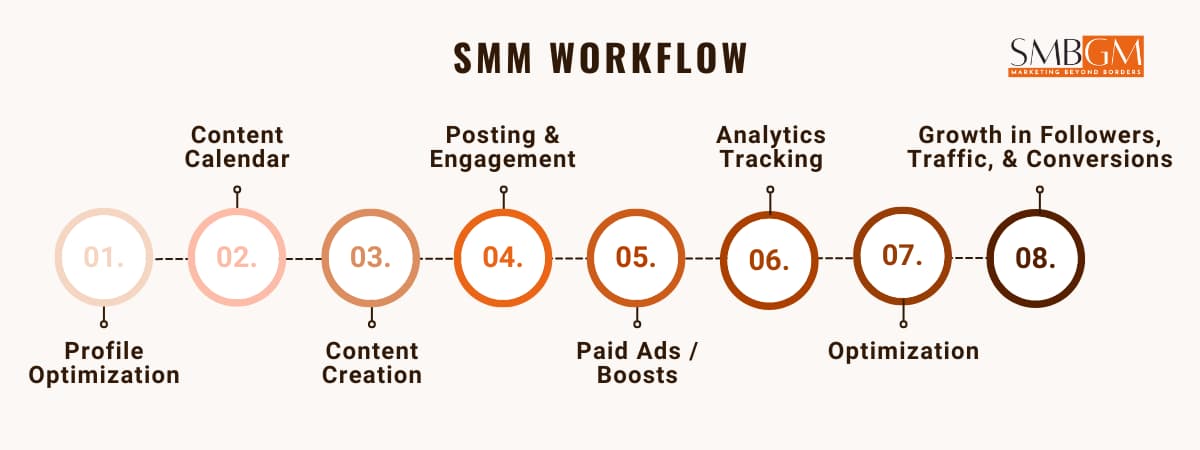
SMM Workflow (Flowchart)
Trends Every Small Business Should Know
SEO Trends
- AI Overviews & generative search change how pages appear
- Relevance and intent-matching matter more than keywords
- E-E-A-T is crucial
- Zero-click results are rising
- Technical SEO (Core Web Vitals) is increasingly important
SMM Trends
- Short-form video dominates (Reels, TikTok, Shorts)
- Authenticity > perfection
- Influencer collaborations continue to grow
- Social commerce expands
- AI-powered content tools reshape workflows
- Fast community engagement is essential
- Cultural relevance drives virality
Which Strategy Is Right for Your SMB?
Choose SEO if you want:
- Long-term compounding traffic
- High-intent leads
- Trust and authority
- Sustainable growth
- Lower cost per acquisition over time
Choose SMM if you want:
- Immediate visibility
- Audience engagement
- Brand storytelling
- Viral potential
- Community building
Choose BOTH if you want:
- The strongest possible digital presence
- Short-term + long-term performance
- Multi-channel reach
- Higher ROI across your entire marketing funnel
SEO and SMM work best when integrated, not isolated.
Conclusion
SEO and SMM are two essential pillars of digital visibility. For small and mid-sized businesses, the strongest growth happens when both strategies work together:
- SEO builds credibility and sustainable traffic.
- SMM builds connection, attention, and community.
Together, they help your business stay visible wherever your customers are searching, scrolling, discovering, comparing, and buying.
At SMBGM, we’ve seen how unified search and social strategies help businesses grow faster, convert more efficiently, and stand out in crowded markets.
Want more customers from Google? SMBGM specializes in SEO that drives sustainable growth for SMBs. Let’s improve your rankings, traffic, and conversions with a strategy built for 2025 search.
Schedule your free SEO strategy call.








 English
 Español