

Overview
- An ecommerce SEO audit evaluates how well your online store is optimized for search engines and buying intent.
- It uncovers technical, content, and user experience issues that quietly limit rankings, traffic, and sales.
- Unlike traditional SEO audits, ecommerce audits focus heavily on product pages, category pages, filters, and site structure.
- The audit examines crawlability, indexing, page speed, mobile usability, internal linking, and schema markup.
- It also identifies problems like duplicate content, keyword cannibalization, broken links, and wasted crawl budget.
- A strong ecommerce SEO audit helps online stores protect organic visibility and turn search traffic into consistent revenue.
- For small and mid-sized businesses, regular audits prevent costly SEO mistakes and support long-term, scalable growth.
If your ecommerce store were a physical shop, an SEO audit would be the full inspection before opening the doors.
You’d check whether customers can find the entrance, whether aisles are clearly marked, whether products are easy to reach, and anything quietly pushes shoppers away before they reach the checkout counter.
Online, those problems aren’t visible.
Your store may look great. Your products may be strong. Ads may be running. Yet organic traffic plateaus. Rankings fluctuate. Sales feel inconsistent.
More often than not, that’s not a marketing problem – it’s an SEO health problem.
An ecommerce SEO audit helps you uncover what’s holding your store back in search, why Google may be overlooking key pages, and where hidden technical or content issues are costing you revenue.
What Is an Ecommerce SEO Audit?
An ecommerce SEO audit is a comprehensive analysis of how well your online store is optimized for search engines and real buyers.
It evaluates whether:
- Search engines can crawl and index your pages correctly
- Product and category pages are optimized for high-intent searches
- Technical issues are limiting visibility or performance
- Your site experience supports both rankings and conversions
Think of it as a full diagnostic check for your ecommerce website’s search performance.
Unlike a standard SEO audit for blogs or service-based sites, an ecommerce SEO audit focuses heavily on:
- Product detail pages
- Category and collection pages
- Faceted navigation (filters and sorting)
- Inventory changes and discontinued products
- Technical scalability
Because in ecommerce, SEO doesn’t just bring traffic — it brings buyers who are ready to act.
Why Ecommerce SEO Is Different From Traditional SEO
Traditional SEO often targets informational searches like:
- “How to clean leather shoes”
- “What is the best CRM software”
Ecommerce SEO targets commercial and transactional intent, such as:
- “Buy men’s leather running shoes”
- “Protein powder free shipping”
- “Standing desk under $500”
That difference changes how SEO works.
Ecommerce websites typically have:
- Thousands of URLs (or more)
- Constant product changes
- Filters that create duplicate pages
- Higher technical risk
- Direct revenue impact from rankings
An ecommerce SEO audit isn’t about publishing more blogs. It’s about ensuring your digital shelves are visible at the exact moment someone is ready to buy.
Why Ecommerce SEO Audits Matter for Online Stores
Running an ecommerce site without regular SEO audits is like managing inventory without stock checks. Here’s why audits are essential.
Rising Dependence on Organic Search
Paid ads are effective, but they’re expensive and unpredictable. For many ecommerce businesses, organic search delivers the highest long-term ROI.
But organic traffic only works if your site is technically sound and properly optimized.
Constant Website Changes Create Risk
Ecommerce sites change constantly:
- New products added
- Old products removed
- Themes updated
- Apps installed and forgotten
Each change can quietly introduce:
- Broken links
- Noindex tags
- Duplicate pages
- Speed issues
Without audits, these problems accumulate unnoticed.
One Technical Mistake Can Cost Revenue
A single issue — like blocking category pages in robots.txt or misconfigured canonical tags — can cause traffic to drop overnight.
An ecommerce SEO audit acts as revenue protection, identifying risks before they impact sales.
Tools Used in an Ecommerce SEO Audit
You don’t need dozens of tools, but you do need the right ones. A focused ecommerce SEO audit uses a small set of proven tools to uncover issues that directly impact traffic, rankings, and sales.
Core Audit Tools
- Google Search Console – Shows how Google views your site, including indexing issues, coverage errors, and search performance.
- Google Analytics (GA4) – Helps analyze traffic behavior, engagement, and conversion paths from organic search.
- SEO Crawlers (Screaming Frog, Sitebulb) – Scan your site like a search engine to uncover technical issues, duplicates, and broken links.
- SEO Research Tools (Ahrefs, Semrush) – Used to review keyword rankings, backlink health, and content overlap.
- Page Speed & Performance Tools – Evaluate loading speed and page experience metrics that affect rankings and user behavior.
Technical Ecommerce SEO Audit: The Foundation
Technical SEO is the foundation of ecommerce visibility. If search engines can’t crawl or understand your site, content optimizations won’t matter.
Crawlability and Indexing
The first question to answer is simple: Can search engines access and index your most important pages?
An audit reviews:
- Indexed vs excluded pages
- Accidental noindex tags
- Crawl errors (4xx and 5xx)
- Outdated or low-value pages still indexed
These “zombie pages” dilute authority and waste crawl resources.
Faceted Navigation: The Most Common Ecommerce SEO Issue
Filters improve shopping experiences — but they can destroy SEO if unmanaged.
For example:
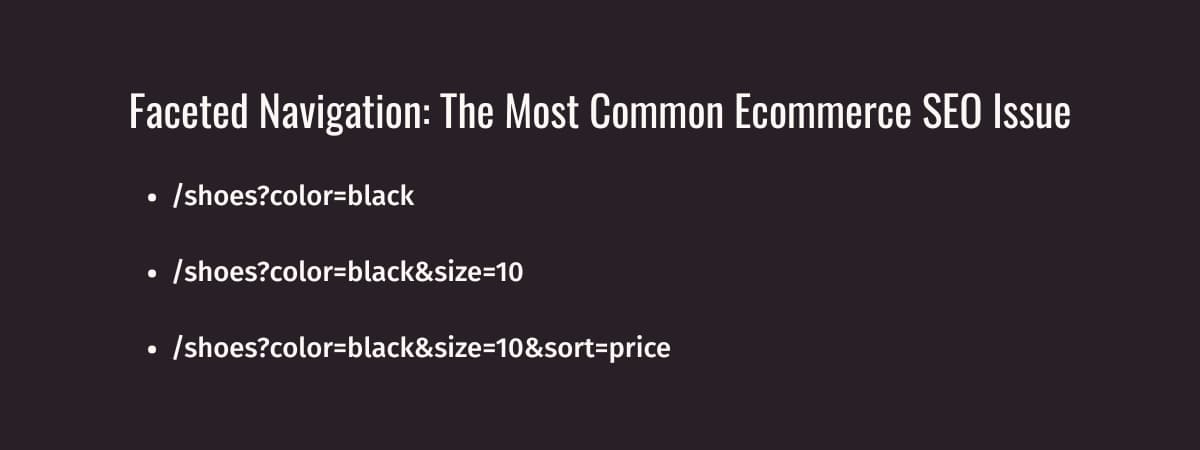
Search engines may treat these as separate pages, even if they show the same products.
Common Risks
- Duplicate content
- Crawl budget waste
- Diluted rankings
Audit Best Practices
- Block low-value parameters like sorting and pricing
- Use canonical tags to consolidate authority
- Only index filter combinations with real search demand
- Avoid indexing auto-generated tag pages
Handled correctly, filters enhance UX without harming search performance.
Pagination and Infinite Scroll
Large category pages require proper pagination so search engines can discover deeper products.
An audit checks:
- Clean URLs for paginated pages
- Crawlable links beyond page one
- Infinite scroll implementations that expose URLs to search engines
If search engines can’t reach products, those products won’t rank.
On-Page Ecommerce SEO Audit: Where Traffic Becomes Revenue
Product Page SEO Audit
Product pages are where rankings turn into sales.
An audit reviews:
- Duplicate manufacturer descriptions
- Thin or missing content
- Poor keyword targeting
- Missing or broken product schema
Every product page should clearly communicate:
- What the product is
- Who it’s for
- Why it’s valuable
- How to purchase it
Product Schema Is Essential
Schema markup helps search engines understand:
- Price
- Availability
- Reviews and ratings
- Shipping and return policies
It also improves click-through rates by enhancing search listings.
Category Page SEO Audit
Category pages often drive the highest revenue because they target broad, high-intent keywords.
An audit checks for:
- Clear H1 and title tags
- Short descriptive content that supports rankings
- Logical internal linking to subcategories
- Avoidance of keyword cannibalization
Content should support discovery without pushing products too far down the page.
Keyword Cannibalization
When multiple pages compete for the same keyword, rankings suffer.
Common scenarios include:
- Category pages competing with subcategories
- Blog posts competing with product collections
An ecommerce SEO audit identifies cannibalization and resolves it through:
- Content consolidation
- Internal linking adjustments
- Clear keyword mapping
UX, Page Experience, and Mobile SEO Audit
Search engines increasingly reward websites that offer strong user experiences. Sites that load quickly, work smoothly on mobile, and feel easy to use tend to rank better — and convert better.
In ecommerce, good UX isn’t just about rankings; it directly impacts sales.
Key Experience Signals
- Loading Speed – Slow-loading product images and scripts increase bounce rates and hurt rankings.
- Interactivity – Filtering, sorting, and cart actions should feel instant.
- Visual Stability – Unexpected layout shifts frustrate users and reduce trust.
Mobile Ecommerce SEO Audit
Most ecommerce traffic comes from mobile devices.
An audit evaluates:
- Readable text without zooming
- Tappable buttons and menus
- Mobile load times
- Intrusive popups that block content
Poor mobile experiences hurt both rankings and conversions.
Platform-Specific Ecommerce SEO Audits
Shopify SEO Audit
Common Shopify issues include:
- Duplicate product URLs through collections
- Auto-generated tag pages
- Limited control over URL structures
Audits focus on:
- Correct canonical usage
- Noindexing low-value pages
- Optimized collection and product handles
WooCommerce SEO Audit
WooCommerce offers flexibility but is prone to bloat.
Audits look for:
- Excessive plugins
- Database clutter
- Cart fragment scripts slowing pages
Lean setups often outperform feature-heavy ones.
Off-Page SEO and Authority Audit
Strong on-site SEO isn’t enough without authority.
An ecommerce SEO audit reviews:
- Backlink quality and relevance
- Toxic or spammy links
- Distribution of links beyond the homepage
- Brand trust signals across the web
Authority tells search engines your store deserves to rank.
What an Ecommerce SEO Audit Does Not Include
To set clear expectations, an ecommerce SEO audit does not cover:
- Paid advertising strategy
- Full conversion rate optimization testing
- Social media management
- Full content production
- Legal compliance audits
It provides the diagnostic roadmap, not every execution task.
How Often Ecommerce Businesses Should Run SEO Audits
General guidelines:
- Small ecommerce stores: annually
- Growing SMBs: every six months
- Highly competitive stores: quarterly reviews
Audits are especially important before:
- Seasonal sales peaks
- Platform migrations
- Major site redesigns
Ecommerce SEO Audit Checklist (Quick Overview)
- Crawl and index coverage
- Robots.txt and canonical setup
- Filter and pagination handling
- Page speed and experience metrics
- Product and category optimization
- Schema validation
- Internal linking structure
- Mobile usability
- Backlink health
An ecommerce SEO audit isn’t about chasing algorithms.
It’s about:
- Protecting visibility
- Eliminating hidden technical barriers
- Turning organic traffic into consistent revenue
- Building a search foundation that scales with your business
SEO opens the door. Your ecommerce experience closes the sale. When both work together, your store doesn’t just rank — it grows.
Ready to Find What’s Holding Your Ecommerce Store Back?
If organic traffic feels inconsistent or growth has stalled, there’s likely an SEO issue beneath the surface.
Book a free ecommerce SEO audit with SMB Global Marketing. We’ll identify what’s limiting visibility and show you exactly how to fix it.
Let’s turn your ecommerce site into a reliable, revenue-generating asset.









 English
 Español