Key Takeaways: How SMBs Can Stay Visible in the Age of AI Search
- Search is evolving fast — it’s no longer just about keywords and rankings.
- AI-driven platforms are reshaping discovery — users now ask ChatGPT, Perplexity, or use Google’s AI Overviews for instant, conversational answers.
- Traditional SEO alone isn’t enough — visibility now depends on how well your content can be understood and surfaced by AI systems.
- Generative Engine Optimization (GEO) is the next phase of search strategy — it focuses on optimizing for AI-generated responses, not just search engine results.
- Small and mid-sized organizations can compete by adapting their content strategies to be more structured, trustworthy, and contextually rich for AI tools.
- This guide explains what GEO is, why it matters, and how to make your content visible in this new AI-driven search landscape.
What Is GEO (Generative Engine Optimization)?
Generative Engine Optimization (GEO) is the practice of adapting your digital content so that it appears, or is cited, within AI-generated answers. It’s the next frontier of online visibility.
Traditional SEO helps you rank on search engines like Google or Bing. GEO helps you appear in AI-generated results on platforms like ChatGPT, Perplexity, Copilot, and Google Gemini.
In essence, GEO means optimizing your content so AI models trust, understand, and reference it when users ask questions.
How GEO Works
Search engines index pages and return lists. Generative engines understand and summarize information from a wide range of trusted sources.
When users ask, “What are the best ways to expand a business into Europe?” or “How does therapy help with anxiety?”, AI models don’t just look for keywords, they look for credible, well-structured, and human-centered answers.
If your content meets those standards, the AI may quote or paraphrase your expertise. That’s GEO in action.
Why GEO Matters Now
AI Is Transforming the way we search. By early 2025, ChatGPT surpassed 400 million weekly users, and Google’s AI Overviews appeared in billions of queries each month.
According to Gartner, by 2026, AI chat interfaces could reduce traditional search volumes by 25%. That means a growing portion of information discovery happens without users ever visiting a website directly.
For many organizations, especially smaller ones, this shift creates both risk and opportunity.
The Opportunity for Growth-Focused SMBs
For e-commerce brands, boutique clinics, SaaS startups, or specialized service providers, Generative Engine Optimization is a visibility accelerator. You don’t need to be a household name to appear in AI-generated answers—you just need to be relevant, trusted, and well-structured.
GEO allows you to:
- Reach beyond your niche — AI tools surface credible content from diverse industries, giving SMBs access to global and multilingual audiences they might not target directly.
- Build perceived authority faster — Being cited by ChatGPT or Perplexity creates instant credibility with users who trust those platforms.
- Capture high-intent moments — Users asking AI tools for “best skin care products for sensitive skin” or “how to switch to a VoIP business line” are often ready to engage or purchase.
Whether you’re a mental wellness app, a sustainable fashion brand, a cosmetic dental practice, or a legal consultant serving bilingual clients—GEO helps your expertise show up at the exact moment users are looking for answers.
GEO ensures your expertise is part of those answers.
GEO vs SEO: The Key Differences
| Aspect | SEO (Search Engine Optimization) | GEO (Generative Engine Optimization) |
| Goal | Rank in search results (SERPs) | Be referenced or cited in AI-generated responses |
| Mechanism | Algorithms index and rank web pages | AI models interpret and summarize trusted data |
| User Experience | Users click through results | Users receive instant, conversational answers |
| Measurement | Rankings, CTR, organic traffic | Mentions, citations, “share of AI voice” |
| Optimization Focus | Keywords, backlinks, metadata | Clarity, factual depth, authority signals |
| Outcome | Users visit your site | Users learn from your content (with or without a click) |
The two disciplines are complementary. Good SEO supports GEO, and GEO future-proofs SEO. SEO ensures visibility on Google today. GEO ensures your organization stays visible tomorrow.
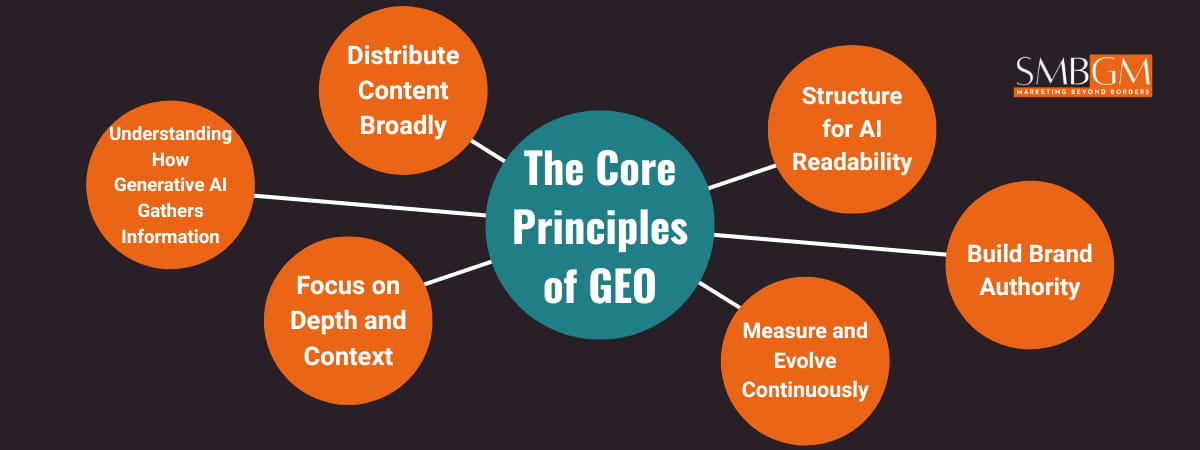
The Core Principles of GEO
To succeed with GEO, organizations must combine SEO fundamentals with new AI-specific practices that focus on trust, clarity, and context.
1. Understanding How Generative AI Gathers Information
AI systems don’t just crawl websites, they learn from structured and unstructured data across the web, including:
- Websites and blogs
- Wikipedia and academic sources
- Forums like Reddit and Quora
- Social mentions, directories, and reviews
That means your digital footprint matters more than ever. Ensure consistent branding and messaging across every channel, so AI models recognize your organization as a credible, unified entity.
2. Focus on Depth and Context
AI models prefer content that adds value, not surface-level summaries.
Depth builds trust signals, something generative engines prioritize when choosing which sources to summarize.
3. Structure for AI Readability
Formatting makes your content “AI-accessible.” Best practices include:
- Descriptive headers (H2/H3) for each subtopic
- Bullet points and step-by-step lists
- Schema markup (FAQ, HowTo, Article)
- Concise summaries or TL;DR sections at the top
AI systems love clarity. The easier your structure, the more likely they are to cite your content.
4. Build Brand Authority
AI models trust entities, not just websites. Use every opportunity to demonstrate authority and credibility:
- Add author bios with credentials and experience
- Maintain accurate listings on Google Business, LinkedIn, and directories
- Get featured on reputable third-party sites (guest articles, press features)
- Use consistent organization names, logos, and NAP (name, address, phone number) info everywhere
When AI sees multiple trusted sources confirming your expertise, your credibility increases exponentially.
5. Distribute Content Broadly
Generative models learn from diverse data sources. That means visibility doesn’t stop at your website.
You should:
- Publish thought pieces or community updates on platforms like Medium or LinkedIn
- Contribute to discussions on Reddit or Quora
- Encourage clients, parents, or partners to share reviews or testimonials
The more your brand is mentioned across the web, the stronger your GEO footprint becomes.
6. Measure and Evolve Continuously
GEO is dynamic. AI systems update frequently, meaning visibility can shift overnight.
Use metrics like:
- AI mention frequency (how often your brand appears in answers)
- Generative appearance score (available in emerging GEO tools)
- Branded search spikes after AI citations
- AI referral traffic (trackable through Google Analytics 4 custom tags)
Regularly test your brand visibility directly in AI engines, and adjust your content as needed.
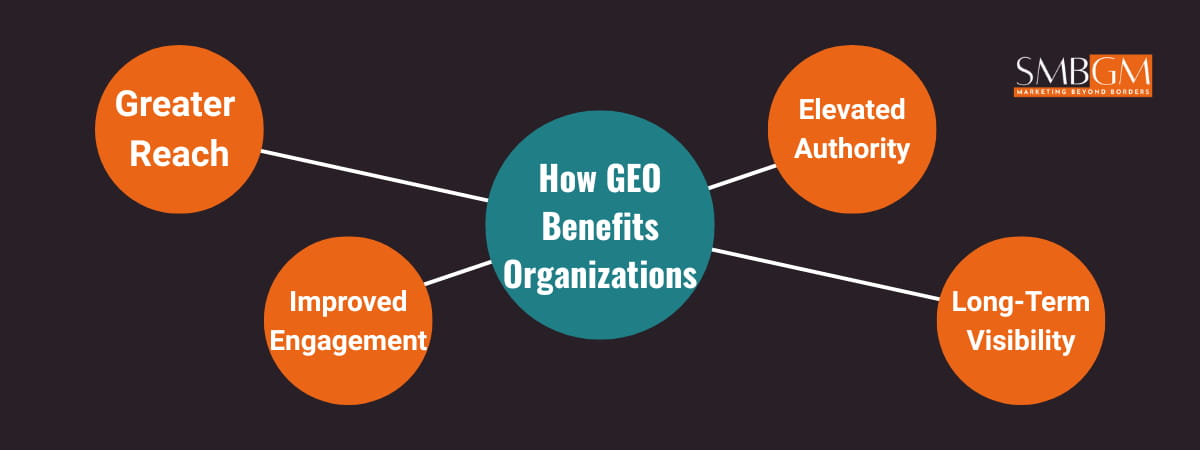
How GEO Benefits Organizations
1. Greater Reach
GEO opens doors to audiences across borders and languages, because generative AI tools pull from multilingual and globally sourced data sets. That means even a smaller e‑commerce brand, or service provider can appear in AI‑generated results seen by users worldwide
2. Improved Engagement
Visitors who arrive from AI-generated answers are usually more intentional. They’ve already seen your brand mentioned in a trusted context — so conversion rates tend to be higher, and engagement deeper.
3. Elevated Authority
Appearing in AI-generated answers boosts brand perception. If ChatGPT, Perplexity, or Gemini cites your organization, users immediately associate you with expertise and credibility.
4. Long-Term Visibility
AI search isn’t a passing trend. Optimizing for generative engines ensures your digital presence remains relevant, even as traditional SEO metrics (like clicks or SERP rankings) evolve.
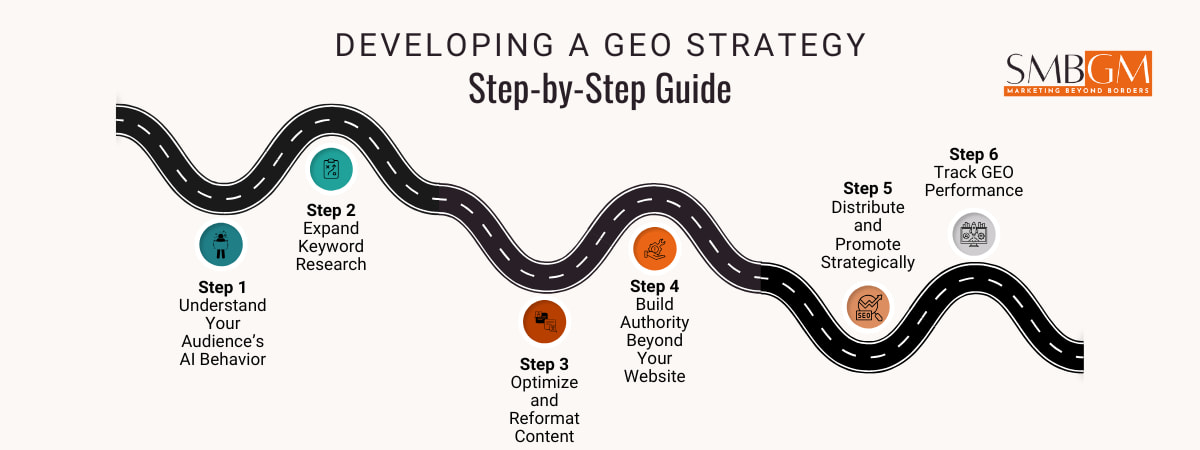
Developing a GEO Strategy: Step-by-Step
Here’s how small and mid-sized organizations can apply GEO strategically and sustainably.
Step 1: Understand Your Audience’s AI Behavior
Start by experimenting with AI tools the same way your audience would.
Ask:
- “What’s the best way to learn Spanish for adults?”
- “Top logistics companies in Latin America”
- “How does therapy help children with ADHD?”
Note which brands and websites appear in responses, these are your GEO competitors.
Step 2: Expand Keyword Research
Traditional keywords still matter, but GEO adds conversational and intent-based phrases:
- “How do I…”
- “What is the best way to…”
- “Should I…”
Tools like AnswerThePublic, AlsoAsked, or even ChatGPT itself can reveal the most common AI-style prompts people use.
Step 3: Optimize and Reformat Content
Make your content both human-friendly and AI-friendly:
- Add FAQs addressing natural questions
- Include structured data for better machine readability
- Use clear, factual introductions that summarize key insights
- Update old content regularly to maintain freshness
If AI systems see that your content is active and trustworthy, they’re more likely to cite it.
Step 4: Build Authority Beyond Your Website
Generative engines value mentions in credible spaces more than backlinks alone.
Focus on:
- Guest contributions to relevant publications
- Mentions in directories or databases (Wikipedia, trade associations)
- Press coverage or thought leadership pieces
- User-generated discussions about your brand
This distributed credibility helps you appear as a recognized entity in AI training data.
Step 5: Distribute and Promote Strategically
AI models train on large, public datasets — so ensure your content lives in multiple places:
- Post summaries or insights on LinkedIn and X (Twitter)
- Contribute to niche communities (educator forums, mental health groups)
- Create multilingual content for broader reach
Visibility in community and conversational spaces strengthens your presence in generative data.
Step 6: Track GEO Performance
Monitor both traditional and AI-specific analytics:
- GA4 → Custom campaigns for AI-based referrals
- Semrush AI Toolkit → “Share of AI Voice” insights
- Goodie AI / LLM Scout → Detect which AI platforms mention you
- Manual prompt testing → Check if you’re cited
Use these insights to refine your strategy continuously.
Tools and Platforms Supporting GEO
Because GEO is still emerging, most practitioners use a mix of classic SEO platforms and new AI visibility tools.
Here’s a quick overview:
| Tool Category | Examples | How It Helps GEO |
| AI Visibility Trackers | Goodie AI, LLM Scout, Profound | Test prompts across ChatGPT, Gemini, and Perplexity; monitor citations and competitor presence |
| SEO + AI Analytics | Semrush AI Toolkit, Ahrefs, RankRanger | Track AI Overview appearances, keyword overlap, and “share of AI voice” |
| Traffic Measurement | Google Analytics 4, Search Console | Capture AI-driven referrals, branded searches, and session duration |
| Content Research Tools | AnswerThePublic, ChatGPT, Perplexity | Discover natural-language queries your audience actually asks |
| Community Platforms | Reddit, Quora, LinkedIn | Build brand footprint across training datasets |
The best GEO strategies combine these tools, pairing AI analytics with strong SEO infrastructure.
The Future of GEO
Generative Engine Optimization will continue evolving as AI search systems grow more sophisticated. Here are emerging trends to watch for:
1. Personalization and Context-Aware Search
AI will increasingly tailor answers based on user history, location, and intent. Future GEO strategies will need to consider audience segmentation — crafting content for multiple personas and cultural contexts.
2. Voice and Visual Integration
Voice search and visual results are merging with generative engines. Organizations should optimize:
- Alt text and descriptive image captions
- Voice-friendly content using conversational tone and FAQs
This ensures visibility across emerging multimodal AI responses.
3. Quality, Freshness, and Credibility
AI engines will prioritize recent, verifiable, and fact-checked sources. Regular updates, transparent citations, and original data will become key GEO ranking factors.
4. Ethical Standards and Regulation
Expect formal guidelines around how AI cites or attributes content. Organizations that focus on authentic, transparent information will benefit as ethical GEO becomes a trust differentiator.
5. Cross-Platform Discoverability
Generative search will soon be embedded everywhere – browsers, operating systems, and voice assistants. That means GEO isn’t limited to websites, it’s about ensuring your expertise appears in every digital conversation.
Conclusion: GEO Is the Future of Organic Visibility
Generative Engine Optimization represents a pivotal evolution in how information is discovered and trusted online.
For small and mid-sized organizations, the message is clear:
- Keep creating authentic, helpful content.
- Structure it so AI systems can understand and cite it.
- Build credibility through consistency, community, and quality.
- Stay agile as the search landscape evolves.
GEO doesn’t replace SEO, it amplifies it. Together, they form the foundation of visibility in the era of AI-driven discovery.
The earlier your organization begins adapting to GEO, the stronger your presence will be as generative engines become the new gateway to knowledge.









 English
 Español