

Overview:
- Understanding the different types of backlinks is critical for SEO success. Not all links are created equal; search engines evaluate them based on authority, relevance, and placement to determine if they pass ranking power or just traffic.
- Technical types of backlinks, like Dofollow and Nofollow, serve different purposes. While Dofollow links directly boost rankings by passing authority, Nofollow and UGC links are essential for building a natural, diverse link profile without manipulating the system.
- The most valuable links are Editorial and Contextual. These “natural” types of backlinks are earned when high-quality sites reference your content. Unlike low-value footer or directory links, contextual placement signals genuine endorsement to Google.
- SMBs must distinguish between White-Hat and Black-Hat types. Sustainable growth relies on ethical strategies like digital PR and guest posting, whereas risky tactics like buying links or using private networks (Black-Hat) can lead to severe penalties.
- A healthy profile requires a mix of backlink types. Rather than chasing just one kind of link, a strong SEO foundation is built on a blend of editorial mentions, local citations, and industry references that signal real-world credibility.
What Are Backlinks (and Why Types Matter)
Backlinks are hyperlinks from one website to another. From a search engine’s perspective, every backlink acts as a “vote” of confidence, signaling credibility, relevance, or endorsement.
However, not all votes count the same.
Search engines evaluate backlinks based on four key factors:
- Authority: Is the linking site trusted?
- Relevance: Does the link make sense for your industry?
- Placement: Is the link hidden in a footer or prominent in an article?
- Intent: Was the link earned naturally or manipulated?
Because of this, backlinks naturally fall into different categories, each with its own strengths, limitations, and risk profile. Understanding these types ensures you invest in links that actually move your rankings, rather than wasting money on ones that Google ignores.
In fact, data shows that pages ranking #1 on Google have 3.8× more backlinks than pages in positions 2–10 — highlighting how strongly backlinks correlate with higher rankings in competitive markets.
Types of Backlinks (Based on How Search Engines Treat Them)
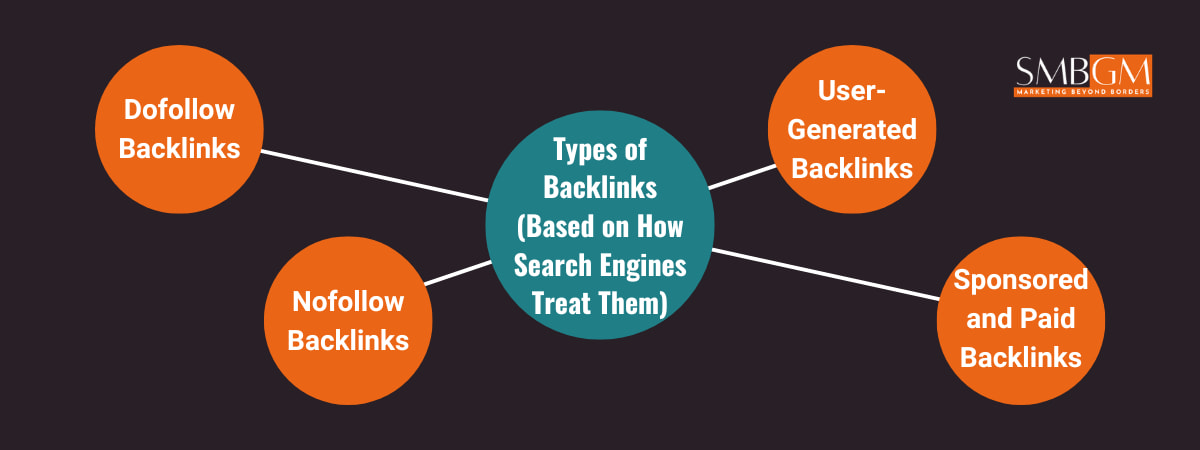
Dofollow Backlinks (The Most Valuable Type)
Dofollow backlinks are the standard link type. They pass ranking equity (often called “authority”) from the linking page to your page.
Why they matter:
- Directly influence your keyword rankings
- Transfer trust from high-authority domains
- Signal to Google that your content is valuable
For SEO, dofollow links are the priority. SMBs should focus on earning these through high-quality content, partnerships, and digital PR rather than trying to “manufacture” them.
Nofollow Backlinks (Visibility Without Ranking Power)
Nofollow backlinks contain a tag (rel=”nofollow”) that tells search engines not to count the link as an endorsement.
While nofollow links do not pass direct ranking equity, they still serve important functions:
- Referral traffic: Real users still click them.
- Brand exposure: Getting seen on major platforms.
- Natural profile: A backlink profile with only dofollow links looks suspicious. You need a healthy mix.
Common sources include: Social media profiles, Wikipedia, and press releases.
User-Generated Backlinks (UGC)
These links use the rel=”ugc” tag and appear in places where users (not site owners) create the content.
Examples:
- Blog comments
- Forum posts (like Reddit)
- Q&A sites
Since anyone can create these links, Google generally ignores them for ranking purposes. Treat them as tools for brand awareness and community engagement, not SEO levers.
Sponsored and Paid Backlinks
These links carry the rel=”sponsored” tag. They are explicitly marked as paid placements, such as affiliate links or banner ads.
These are for marketing, not SEO. They drive traffic and sales, but they will not help you rank higher in search results.
Types of Backlinks Based on How You Get Them
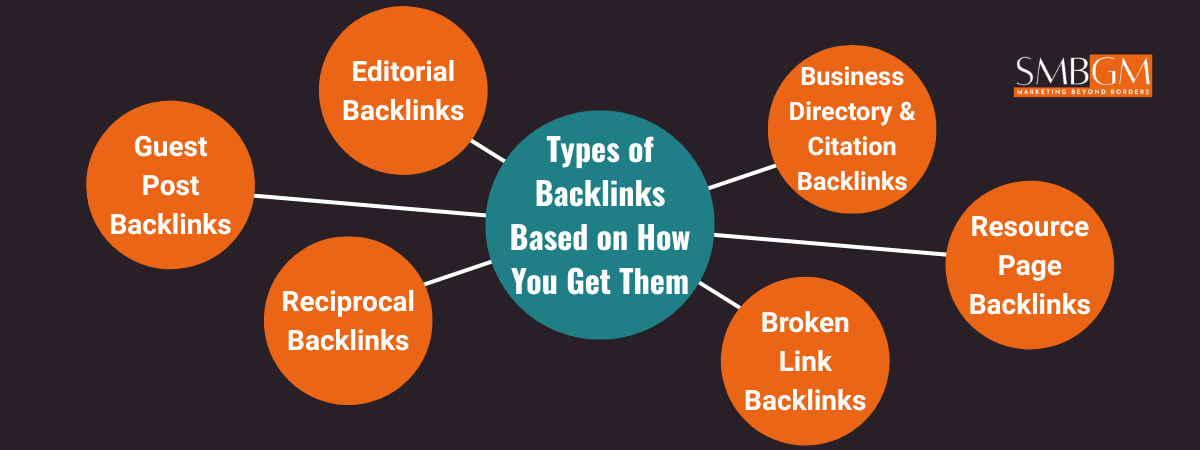
Editorial Backlinks (Natural Links)
Editorial backlinks are links given voluntarily by publishers because your content or business provides value.
These are the most powerful type of backlinks because they:
- Are earned, not requested
- Appear naturally within relevant content
- Come from authoritative sources
Examples include:
- A local news site linking to your business’s charity event
- A supplier or partner listing you as a trusted retailer
- An industry blog quoting your owner’s take on a market trend
Strategic role:
Editorial backlinks form the backbone of sustainable SEO authority because they signal genuine popularity and trust
Guest Post Backlinks
Guest post backlinks are earned by contributing content to external publications.
When executed correctly, guest posting provides:
- Topical relevance
- Brand exposure
- Controlled anchor text (within reason)
Risks:
- Low-quality guest networks
- Over-optimized anchor text
- Mass-produced content
Strategic use:
Guest posting should focus on authority-building, not link volume. Contributing high-quality articles to reputable industry sites builds your reputation as an expert, whereas mass-posting on low-quality blogs looks like spam to Google.
Reciprocal Backlinks (Link Exchanges)
Reciprocal links occur when two websites agree to link to one another—essentially a “you link to me, I link to you” arrangement.
While these happen naturally between business partners, they are closely scrutinized by search engines.
They are acceptable when:
- They exist between relevant businesses (e.g., a wedding venue linking to a preferred caterer)
- They provide actual value to the user navigating between sites
They become risky when:
- Done in excessive bulk solely to boost numbers
- The two sites have no logical connection to each other
Strategic use:
Limit reciprocal linking to genuine real-world partnerships. Avoid automated “link exchange” networks or emailing strangers just to swap links, as this can trigger spam filters.
Business Directory and Citation Backlinks
These backlinks come from:
- Business directories (like Yelp or BBB)
- Industry-specific listings
- Local citation platforms
They are especially important for:
- Local SEO
- Brand legitimacy
- NAP consistency
Most directory links are nofollow, but they still reinforce trust and relevance—provided they come from reputable sources rather than low-quality, generic web directories
Strategic use:
Directory backlinks establish foundational credibility, especially for SMBs. Focus on securing listings in city-specific or industry-relevant directories, as mass submissions to broad, low-quality sites provide little to no value.
Resource Page Backlinks
Resource page backlinks are earned when your content is listed as a helpful reference on a curated list.
Examples:
- “Best tools for ecommerce SEO”
- “Helpful resources for small businesses”
These links are:
- Highly contextual
- Often dofollow
- Strong relevance signals
Strategic use:
Creating genuinely useful assets (like comprehensive guides, tools, or original data) increases eligibility for resource-based links. If your content is the “best answer” on the web, other sites will naturally want to link to it to add value for their own readers.
Broken Link Backlinks
Broken link building involves identifying dead links on other websites and offering your content as a replacement.
Benefits:
- High success rate (because you are helping the site owner fix an error)
- Value-driven outreach
- Natural editorial placement
Strategic use:
This tactic works best for evergreen content and guides. By helping webmasters fix broken links on their site, you position your brand as a helpful solution rather than just another solicitor asking for a favor.
Types of Backlinks Based on Where They Appear
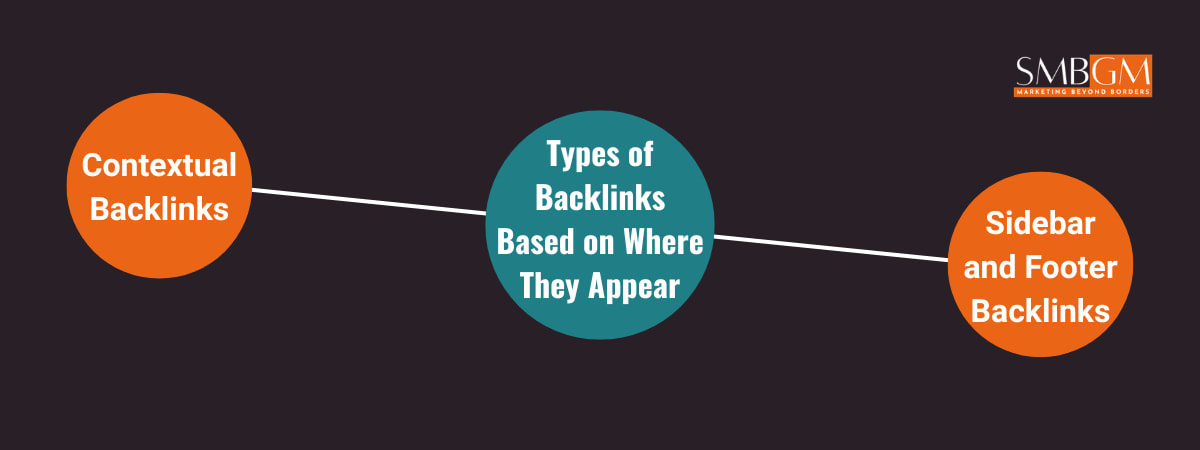
Contextual Backlinks
These links are placed naturally within the body paragraphs of a webpage, surrounded by relevant text.
They are the most valuable because:
- The surrounding text tells Google exactly what the link is about.
- Users are most likely to click links embedded in helpful content.
- They signal a true editorial endorsement.
Strategic Use:
Always prioritize getting your link inside the main article content. A link in the middle of a blog post is worth significantly more than a link in an author bio or a resource list at the bottom of the page.
Sidebar and Footer Backlinks
These links appear in the margins or bottom of a website, meaning they often show up on every single page of that site (known as “sitewide links”).
While useful for navigation, they carry risks:
- Diluted Value: Google treats sitewide links as one single vote, not thousands of votes.
- Spam Signals: Excessive sitewide links (especially with exact-match keywords like “Best Plumber”) are a common trigger for penalties.
Strategic Use:
Treat these with caution. If you sponsor a local charity or partner, ask for a link on their dedicated “Partners” page (which is contextual) rather than a logo in their footer. If you must have a footer link, keep the anchor text branded (e.g., “Web Design by [Your Brand]”) rather than using keywords.
Types of Backlinks Based on Risk Level
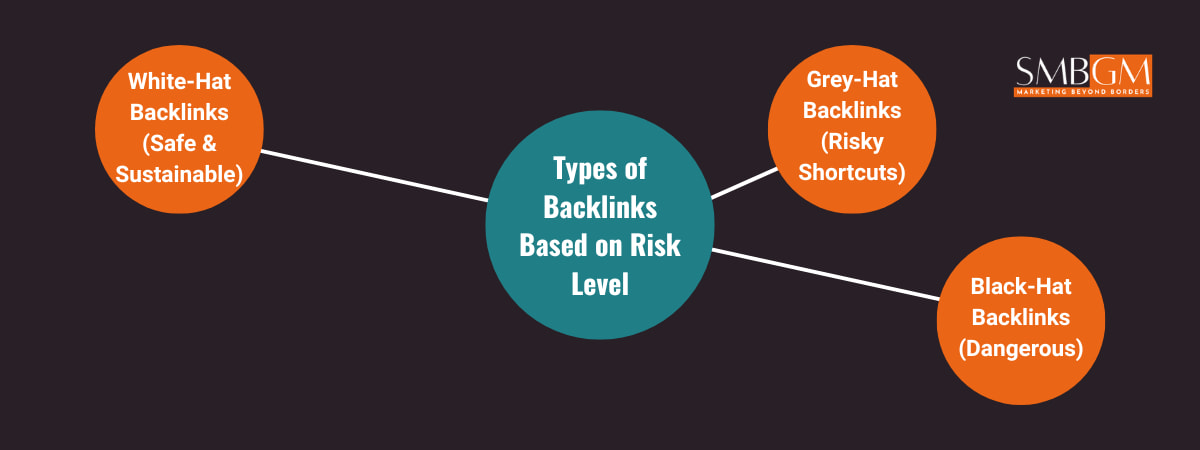
White-Hat Backlinks (Safe & Sustainable)
White-hat backlinks are earned through ethical, guideline-compliant practices that focus on users first, not search engines.
Examples:
- Content marketing (creating helpful guides)
- Digital PR (getting cited in news)
- Genuine Partnerships
This is the only strategy that supports long-term, penalty-free growth. While it requires more effort upfront, white-hat links build an asset that competitors cannot easily copy.
Grey-Hat Backlinks (Risky Shortcuts)
Grey-hat strategies operate in ambiguous areas. They technically follow some rules but violate the “spirit” of Google’s guidelines by manipulating rankings.
Examples:
- Scaled guest posting (posting on low-quality sites just for links)
- Aggressive anchor text optimization (using “Best Plumber New York” excessively)
- Buying links that aren’t clearly marked as sponsored
These tactics may offer short-term boosts, but they carry significant risk. If Google updates its algorithm to detect these patterns, your site could lose traffic overnight. Avoid building a strategy dependent on grey-hat tactics.
Black-Hat Backlinks (Dangerous)
Black-hat techniques are direct violations of Google’s Webmaster Guidelines. They are purely manipulative and often automated.
Examples:
- Paid links intended to pass PageRank
- Private Blog Networks (PBNs)
- Link farms and comment spam
Strictly avoid these. Using black-hat tactics exposes your website to Manual Actions (penalties), where Google can remove your site from search results entirely. No short-term gain is worth the risk of de-indexing.
How SMBs Should Prioritize Backlink Types
A healthy, “penalty-proof” backlink profile is not built by accident. It follows a strict hierarchy of quality:
- The Core: Editorial backlinks from relevant industry sites (to build authority).
- The Support: Selective, high-quality guest posts (to broaden reach).
- The Foundation: Local and niche citations (to establish trust).
- The Natural Mix: A healthy layer of nofollow links (to look organic).
The goal is credibility, not manipulation. If a link is easy to get, it’s probably not worth much. If it’s hard to earn, it’s likely a ranking signal your competitors can’t copy.
Which Types of Backlinks Matter Most Today
Google’s algorithms have evolved beyond just counting links; they now look for E-E-A-T (Experience, Expertise, Authoritativeness, and Trustworthiness).
In this modern landscape, the links that matter most are:
- Earned, Not Bought: Links that exist because a human editor decided your content was valuable.
- Brand-Building: Links that drive real referral traffic, not just “link juice.”
- Contextually Relevant: Links from sites that actually make sense for your industry.
Any link that can be bought in bulk or automated is usually a liability, not an asset.
The SMB Global Marketing Difference
Most SEO agencies treat backlinks as a commodity—selling “packages” of 50 links a month regardless of quality. This approach doesn’t just waste budget; it puts your entire website at risk of a Google penalty.
At SMB Global Marketing, we engineer long term authority focusing on link safety and ROI:
- We unlock your hidden network. We sit down with you to identify the real-world connections you already have—like suppliers, partners, and associations. Then, we craft the perfect message and positioning to turn those handshakes into high-value, natural backlinks.
- Real relationships, not bots. For outreach, we don’t use automated spam networks. We manually pitch your business to real journalists and bloggers to get you featured where it counts.
- Focus on what grows your business. We don’t chase vanity metrics. We target the specific links that help you rank for your most profitable services and products.
We don’t just write the guide on backlinks, we execute it every day for growing businesses just like yours.
Ready to build a backlink profile that actually drives growth?
Stop gambling with risky packages. Let’s build something sustainable together.








 English
 Español