

Quick Overview of Video Marketing SEO
- Video search is no longer limited to Google or YouTube. Today, audiences discover brands through a mix of search engines, video platforms, and social feeds.
- Video SEO is driven as much by viewer behavior as by optimization. Watch time, engagement, and consistency directly influence visibility.
- Different platforms reward different signals. YouTube, TikTok, and Vimeo each require a distinct approach.
- Channels grow faster when keyword data informs creative choices. We use real-world examples to show how data supports consistent growth.
Why Video SEO Is Now a Growth Lever
Video has shifted from being a supporting marketing tactic to becoming a central discovery channel. Over the past few years, we’ve seen a clear change in how people search for information. Instead of reading long pages, users increasingly prefer to watch, listen, and observe. This behavior is shaping how platforms rank content and how brands must approach visibility.
From our experience at SMBGM working with growing brands, video is often the missing link in SEO strategies that have otherwise plateaued. Websites may be technically sound and content-rich, yet still struggle to expand reach. Video fills that gap by capturing attention in places traditional SEO cannot.
On search-focused platforms like YouTube, video offers the same long-term value as a high-ranking article. A well-optimized video can continue attracting views and engagement for years, quietly supporting brand awareness and conversions long after publication.
What Video Marketing SEO Really Means
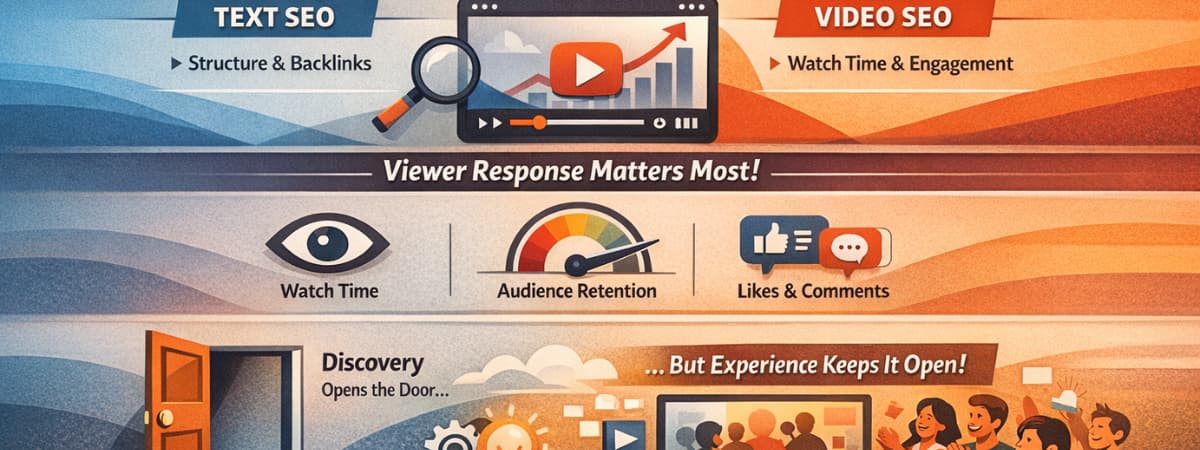
Video marketing SEO is the practice of making video content easy to find, easy to understand, and compelling enough to watch. Much like modern website SEO, success relies less on technical inputs (like keywords and metadata) and more on relevance and user satisfaction.
However, the specific signals differ. While text SEO often relies on structure and backlinks to build authority, Video SEO relies heavily on linear engagement.
In our work, we’ve learned that platforms are less interested in what creators say about their videos and more interested in how viewers respond to them. Titles and descriptions help with discovery, but sustained visibility comes from watch time, retention, and interaction.
This is why video SEO must be treated as both a content and experience discipline. The technical setup opens the door, but the viewer experience determines whether the door stays open.
How Video Discovery Has Changed
Search behavior today is fragmented across platforms. People might start with Google, switch to YouTube for deeper understanding, and then check TikTok for real-life opinions or quick demonstrations. Each of these touchpoints plays a role in shaping perception and trust.
From our perspective, brands that succeed in video SEO are the ones that stop thinking in terms of a single platform. Instead, they focus on consistent messaging and value delivery, allowing different platforms to amplify the same core idea in different formats.
This shift also means that video SEO is no longer optional. Even brands that rely heavily on written content eventually face visibility limits if they don’t meet audiences where they prefer to engage.
Our Experience: Aligning Search Intent with Creative Vision
Over the years, we’ve advised on a range of video formats, from educational explainers to highly engaged niche communities. One of our most insightful collaborations has been providing strategic search data for theRamona Barn Owls (RBO) YouTube channel.
RBO is a unique example because the content is highly specific, observational, and community-driven. The channel doesn’t rely on flashy production or aggressive promotion. Instead, its growth comes from consistency, clarity, and deep audience interest.
Our role is to identify the questions and topics real users are searching for, allowing the creative team to align their video concepts with actual demand. By mapping these search insights to the channel’s content, we’ve seen firsthand how data supports creativity. Videos that are titled and structured to answer specific viewer curiosities—based on our research—consistently outperform those that rely on guesswork.
Titles, Descriptions, and Clarity Over Cleverness
One of the earliest lessons we apply with clients is the importance of clarity. In video SEO, a title is not a branding exercise. It’s a promise.
When working on channels like RBO, we’ve seen that straightforward titles outperform vague or overly creative ones. Viewers searching for specific observations or updates respond better to titles that clearly state what the video contains.
Descriptions play a supporting role. While many creators underuse them, descriptions help platforms understand context and help viewers decide whether the video matches their intent. We focus on natural language summaries that mirror how people actually search.
Engagement Signals That Drive Visibility
From experience, engagement is the strongest long-term driver of video SEO. Platforms reward content that keeps people watching and interacting.
Watch time and retention consistently correlate with visibility. On channels like RBO, videos that maintain steady pacing and avoid unnecessary filler tend to circulate longer in recommendations.
Comments and likes add another layer. While they may seem secondary, they act as confirmation signals. When viewers take the time to respond, platforms interpret that as meaningful engagement.
Platform Differences
Although the core principles of video SEO remain consistent, execution varies by platform. YouTube favors depth and sustained viewing, TikTok rewards immediacy and trends, and Instagram blends discovery with community connection.
In practice, we advise clients to develop a single content theme and then adapt its presentation. This avoids fragmentation while still respecting platform norms.
The RBO channel illustrates this balance perfectly. It leverages livestreaming to drive the deep, session-based viewing that YouTube rewards, while using Shorts to capture rapid discovery and new subscribers.
How Platforms Evaluate Video Content
| Platform | Primary Discovery Signal | What Performs Best |
|---|---|---|
| YouTube | Search Intent & Watch Time | Educational, long-form, series-based content |
| TikTok | Interest Graph (Hooking new users instantly) | Fast-paced, trend-aware videos that hook instantly. |
| Follower Engagement | Aesthetic, lifestyle-focused Reels that drive shares. |
Video SEO and Website Performance
Embedding video on websites has consistently improved engagement metrics in our client work. Pages with relevant video tend to keep users longer, reduce bounce rates, and improve overall page value.
For SEO, this matters because search engines increasingly evaluate user behavior. Video acts as an anchor, encouraging visitors to stay and explore.
When combined with transcripts or supporting text, videos also strengthen topical relevance, making pages more competitive in search results.
Measuring What Actually Matters
In video SEO, not every metric deserves equal attention. From experience, focusing on the wrong numbers leads to poor decisions.
We prioritize metrics that indicate satisfaction rather than vanity. Audience retention and returning viewers provide far more insight than raw view counts.
For a community-driven channel like RBO, we prioritize engagement depth over viral spikes. A smaller, loyal audience that returns for every video signals far more long-term health than a single viral hit that brings no new subscribers.
Engagement vs. Visibility Relationship
| Engagement Level | Visibility |
|---|---|
| Low retention | Limited recommendations (Video dies quickly) |
| Moderate retention | Stable search presence (Consistent, long-term views) |
| High retention + interaction | Expanding discovery (Viral growth to new audiences) |
Common Pitfalls in Video Strategy
The most frequent error we navigate isn’t technical—it’s strategic. Brands often prioritize “going viral” over serving their specific audience.
Over-optimizing titles with clickbait or chasing unrelated trends might bring a temporary spike, but it rarely builds loyalty. Algorithms are increasingly smart enough to detect when content doesn’t deliver on its promise.
This is why the RBO example is so instructive. By staying true to the specific interests of their community rather than trying to manufacture mass appeal, they build the kind of genuine authority that platforms reward long-term.
Building a Sustainable Video SEO Framework
From our experience, sustainable video SEO relies on repeatable systems rather than individual wins. This includes clear content themes, realistic production schedules, and ongoing performance review.
Instead of treating each video as a campaign, we recommend viewing content as a growing library. Over time, this creates compound visibility.
Brands that adopt this mindset tend to see more predictable growth and stronger audience loyalty.
The Future of Video SEO
Search is becoming more visual, more conversational, and more fragmented. Video sits at the center of this evolution.
As platforms continue blending search, social, and commerce, video SEO will increasingly influence how brands are discovered and trusted. Our experience suggests that those who invest early in clarity and consistency will have a lasting advantage.
Final Thoughts
Video marketing SEO is not about gaming algorithms. It’s about earning attention.
The steady trajectory of this channel serves as a reminder that you don’t need viral tricks to build a loyal audience. When content respects viewer intent and delivers value consistently, visibility follows naturally.
For brands willing to commit to this long-term approach, video SEO becomes one of the most reliable growth channels available.









 English
 Español