

Overview
- Advanced keyword research strategies go beyond simple lists of popular search terms. Instead of just chasing high traffic numbers, this approach focuses on understanding exactly what your customers want and why they are searching for it.
- Relying on basic metrics like “Search Volume” often fails. For SMBs, high-volume keywords are usually too competitive. Advanced strategies focus on “relevance” instead—finding the specific, lower-competition terms that actually lead to sales.
- You need to map keywords to the buyer’s journey. A smart strategy targets customers at every stage—from those just asking questions (Awareness) to those ready to buy (Decision)—creating a steady pipeline of leads.
- The best insights come from Competitor Gap Analysis and your own data. By looking at what your competitors rank for (and using data from Google Analytics) you can find hidden opportunities and content gaps that standard tools miss.
- This approach builds sustainable growth, not just traffic spikes. Advanced keyword research is an ongoing process. By constantly refining your targets, you ensure your website attracts qualified visitors who are likely to convert, rather than just casual browsers.
In today’s SEO landscape, keyword research has evolved far beyond pulling a list of popular search terms from a tool and building content around them. Search engines are more sophisticated, users are more intentional, and competition is more aggressive than ever. For small and mid-sized businesses, this means one thing: basic keyword research is no longer enough to drive consistent, scalable organic growth.
Advanced keyword research is not about chasing traffic for its own sake or relying on complex SEO jargon. It is about aligning search demand with business objectives, understanding user intent deeply, and building topical authority in a way that compounds over time. When done correctly, it becomes a strategic growth lever—guiding content creation, site architecture, conversion pathways, and even product positioning.
Why Basic Keyword Research No Longer Works
Traditional keyword research typically revolves around three metrics: search volume, keyword difficulty, and cost per click. While these metrics still have value, relying on them alone often leads to disappointing results.
High-volume keywords are usually highly competitive, dominated by established brands with massive authority. Low-volume keywords are often dismissed entirely, even though they may represent strong buying intent. And keyword difficulty scores rarely account for real-world nuances such as intent alignment, content quality, or SERP volatility.
Advanced keyword research shifts the focus from how many people search to why they search and what action they are trying to take. It prioritizes relevance, intent, and strategic fit over raw numbers. This is especially critical for SMBs that need efficiency and ROI, not vanity traffic.
Aligning Keywords With User Intent and the Buyer Journey
Every search query reflects a specific need, question, or goal. Understanding that intent is the foundation of advanced keyword research.
Mapping Keywords to Funnel Stages
Keywords should be mapped to the stages of the buyer journey:
- Awareness stage keywords reflect early problem recognition or curiosity. Examples include “how to improve team productivity” or “what is email deliverability.”
- Consideration stage keywords show evaluation and comparison behavior, such as “best project management tools” or “email marketing software comparison.”
- Decision stage keywords signal readiness to act, including queries like “HubSpot pricing,” “Mailchimp alternatives,” or “buy CRM software.”
Advanced research ensures that your keyword strategy covers the entire funnel, not just the bottom. This creates a predictable pipeline where early-stage content builds trust and authority, while later-stage content captures conversions.
Understanding Search Intent Types
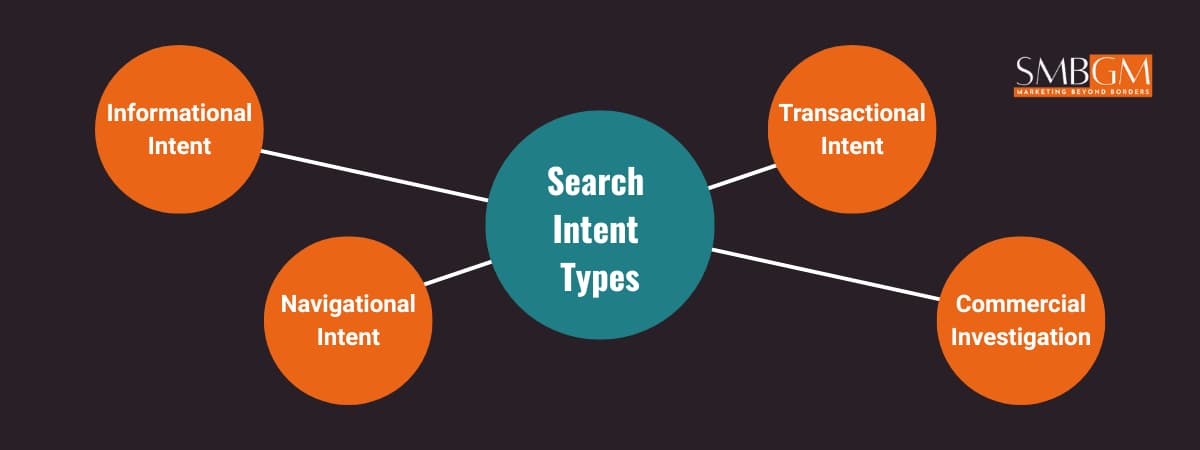
Beyond funnel stages, keywords can be categorized by intent type:
- Informational intent: users seeking knowledge or answers
- Navigational intent: users trying to reach a specific brand or site
- Transactional intent: users ready to purchase or sign up
- Commercial investigation: users comparing options or researching solutions
Advanced practitioners also consider micro-intents such as local intent, question-based intent, or urgency-driven intent. Each intent type requires a different content approach, format, and depth.
Using SERPs to Decode Intent
Google’s search results reveal how it interprets intent. By analyzing the top-ranking pages for a keyword, you can identify:
- The dominant content type (blog, landing page, product page)
- The preferred content format (how-to guide, listicle, comparison)
- The content angle (beginner-friendly, expert-level, price-focused)
If the SERP is dominated by comparison articles, a product page is unlikely to rank—no matter how well optimized it is. Advanced keyword research always starts with SERP analysis to ensure alignment before content is created.
Identifying Competitor Keyword Gaps
One of the most powerful advanced strategies is competitor gap analysis. Your true SEO competitors are not just businesses like yours—they are any sites ranking for the queries you want to target.
Finding Real SEO Competitors
By searching your core keywords manually, patterns emerge. Certain domains appear repeatedly, even if they are not direct business competitors. These are your true SEO rivals.
It is also important to identify indirect competitors—sites that serve the same audience but offer different solutions. Their keyword strategies often reveal opportunities you may not have considered.
Conducting Keyword Gap Analysis
Using tools like Ahrefs or Semrush, you can compare your domain against competitors to uncover:
- Keywords competitors rank for that you do not
- Keywords where competitors outrank you
- Keywords where your site is close to page one but underperforming
These gaps represent high-opportunity areas, especially when they align with your offerings and user intent.
Analyzing Why Competitors Rank
Ranking is rarely about keywords alone. Advanced analysis looks at:
- Content depth and structure
- Topic coverage and subtopics
- Internal linking patterns
- Backlink profiles
- SERP feature ownership
Often, competitors rank simply because their content better satisfies intent—not because they have significantly stronger authority. This insight helps prioritize improvements that deliver the fastest returns.
Leveraging First-Party Data From GA4 and Search Console
Your own analytics data is one of the most underused resources in keyword research.
Mining Internal Search Data
GA4 reveals what users search for once they arrive on your site. These internal search queries expose content gaps, unclear navigation, or unmet user needs. Even if external search volume is low, these keywords are highly relevant to your audience.
Unlocking Search Console Opportunities
Google Search Console shows which queries trigger impressions for your site—even when users do not click. High-impression, low-click queries often indicate:
- Missing content
- Poor intent alignment
- Weak titles or descriptions
Creating dedicated content for these queries can unlock traffic you are already close to capturing.
Embracing Long-Tail and Low-Volume Keywords
Advanced keyword research values specificity over scale.
The Power of Long-Tail Queries
Long-tail keywords are more detailed, less competitive, and often convert better. While each may drive limited traffic individually, collectively they can outperform head terms.
Grouping related low-volume keywords into comprehensive content allows you to rank for dozens—or hundreds—of variations.
Mining Forums and Q&A Platforms
Platforms like Reddit, Quora, and industry forums reveal how real people articulate their problems. These questions often never appear in keyword tools, yet they reflect genuine demand.
Content built around these queries tends to resonate deeply and earn strong engagement signals.
Using People Also Ask Strategically
People Also Ask boxes surface common follow-up questions. These questions are ideal for:
- Content expansion
- FAQ sections
- Supporting subheadings
They help align your content with how users naturally explore a topic.
Mastering Semantic SEO and Keyword Clustering
Google no longer ranks pages solely based on exact-match keywords. It evaluates topical coverage and contextual relevance.
Moving From Keywords to Topics
Semantic SEO focuses on covering the entire concept around a topic. This includes:
- Related terms and synonyms
- Subtopics and supporting concepts
- Relevant entities such as brands, tools, or technologies
Including these naturally signals depth and expertise.
Building Topic Clusters
Topic clusters organize content into:
- A central pillar page targeting a broad concept
- Multiple cluster pages covering specific subtopics
This structure improves crawlability, internal linking, and topical authority. It also enhances user experience by guiding visitors through related content logically.
Clustering Keywords by Intent
Advanced research groups keywords by shared intent rather than slight wording differences. One intent should be served by one authoritative page. This avoids cannibalization and strengthens ranking potential.
Using SERP Features as Keyword Intelligence
The search results themselves are a research tool.
- People Also Ask reveals common questions
- Related searches uncover alternative phrasing
- Featured snippets indicate preferred answer formats
- Knowledge panels highlight key entities
- Autocomplete suggestions expose trending queries
Monitoring these features regularly helps identify new opportunities as search behavior evolves.
Identifying Seasonal and Emerging Trends
Keyword demand changes over time.
Leveraging Seasonality
Google Trends reveals cyclical patterns that inform content timing. Publishing or updating content ahead of seasonal peaks improves visibility when demand surges.
Capturing Emerging Topics Early
Rising trends often represent low-competition opportunities. Creating content early allows you to establish authority before competitors react.
Geographic trend analysis further refines targeting for local or international strategies.
Scaling Keyword Research With Advanced Tools
Automation and AI enhance—but do not replace—strategy.
- Keyword clustering tools organize large datasets
- Content analysis platforms reveal semantic gaps
- AI-powered insights accelerate discovery
The most effective teams use tools selectively, guided by clear strategic goals.
Advanced Keyword Research as an Ongoing Process
Keyword research is not a one-time task. It is a continuous cycle of analysis, testing, and refinement.
As search behavior evolves, new opportunities emerge. Businesses that revisit and refine their keyword strategy consistently build durable organic growth.
Advanced keyword research moves beyond chasing traffic. It aligns search visibility with business outcomes—driving qualified visitors, stronger engagement, and sustainable revenue growth.
When strategy, intent, and execution work together, keyword research becomes more than an SEO task. It becomes a competitive advantage.









 English
 Español