

Why Multilingual Websites Matter
The internet may feel borderless, but language is still one of the biggest barriers to global growth. As of 2025, only 26% of internet users are native English speakers, meaning that businesses relying on English only websites automatically exclude three quarters of potential customers.
In fact, a recent article by Weglot shows that:
- 40% of consumers will never purchase from websites that aren’t in their native language.
- 9 out of 10 internet users said that, whenever possible, they always visit a website in their own language.
That’s why learning how to make multilingual website is essential. Done right, it builds trust, improves user experience, and unlocks new revenue streams across borders.
At SMB Global Marketing (SMBGM), we specialize in creating multilingual websites that are not just accessible, but profitable. By combining SEO, localization, and smart development strategies, we help businesses connect with audiences worldwide.
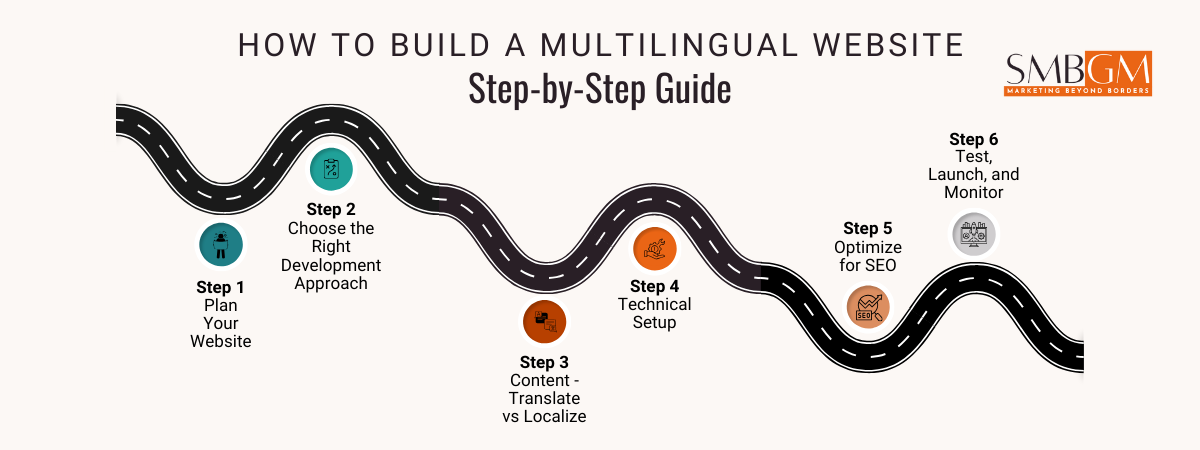
Step 1 – Plan Your Website
A successful multilingual website starts with a clear plan. Too many businesses jump straight into translation without defining their targeted audience and goals.
- Identify your target markets: Instead of guessing, look at your analytics, customer inquiries, or competitor activity to decide where demand exists.
- Choose languages strategically: Focus on markets that offer the highest return on investment (ROI). For a U.S.-based logistics company, this might include Spanish for Latin America, or languages like German and French for key European markets.
- Define business goals: Are you aiming to generate international leads, sell products abroad, or raise awareness? Each goal impacts your site structure and content priorities.
At SMBGM, we help our clients define a roadmap that aligns multilingual websites with long-term growth strategies, not just a quick translation project.
Step 2 – Choose the Right Development Approach
When learning how to make a website multilingual, your choice of platform matters.
- DIY Website Builders with Multilingual Plugins
Platforms like Shopify, Webflow, or even WordPress can support multiple languages through third-party plugins or apps.
- Pros: Affordable, quick to set up, familiar platforms, and access to many plugins/apps
- Cons: Performance can suffer with too many plugins/apps, multilingual SEO options may be limited, and customization is restricted
- Professional WordPress Development (SMBGM’s Approach)
For small to mid-sized businesses serious about growth, a professionally developed WordPress website with multilingual SEO built in is the best long-term solution.
- Pros: Tailored design, optimized SEO, scalable as you grow, and ongoing support
- Cons: Higher upfront investment than DIY tools
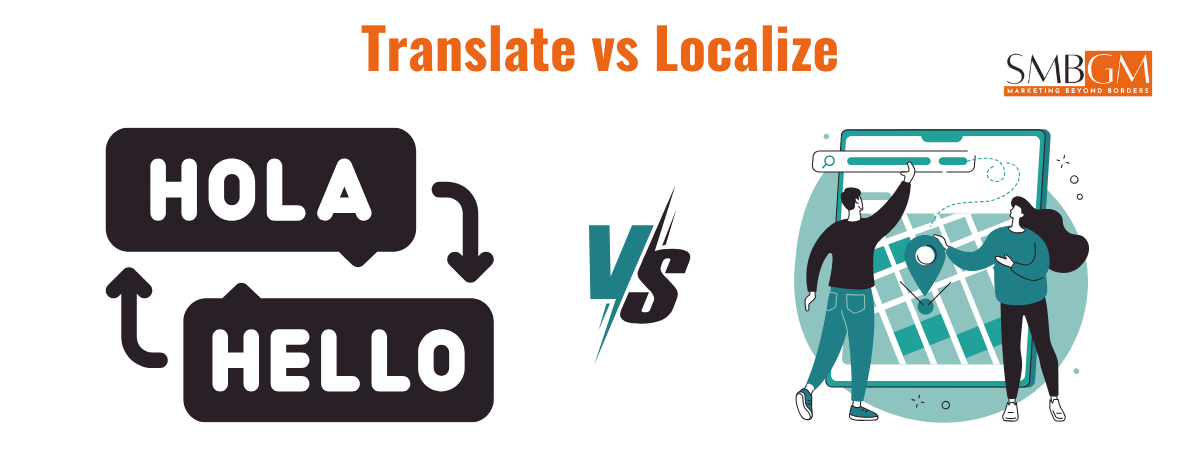
Step 3 – Content: Translate vs Localize
Translation is just the beginning. The real power of multilingual websites lies in localization.
- Translation converts text word-for-word between languages.
Example: “Car rental” → “Alquiler de coches” in Spanish. - Localization adapts the message to fit cultural norms and expectations.
Example: A “Car rental” ad in Spain might use “Alquiler de coches,” while in Mexico, it could be “Renta de autos”—both correct, but tailored to local usage.
Why does this matter? Even small language differences can cost you visibility, or credibility.
Example: In the UK, landlords use “House to Let” in property listings, while in the U.S. you’d see “House for Rent.” If you only optimize your SEO or copy using U.S. phrases like “rent” when targeting the UK market, you might miss out on what people are actually searching.
At SMBGM we specialize in culturally relevant content strategies that go beyond word-for-word translation, ensuring your website truly resonates with international audiences.
Step 4 – Technical Setup
A multilingual website isn’t just about translating content, it’s also about how your site is structured behind the scenes. Both visitors and Google need to easily find the right version of your site.
Website Address (URLs): Give each language its own clear address. The best option depends on your goals:
- Subdirectories (example.com/es/): SEO-friendly, easiest to manage, great for small businesses.
- Subdomains (es.example.com): Treated as separate sites by Google; can work if you want distinct teams/markets, but SEO authority is split.
- ccTLDs (example.fr): Strongest local signal for country-specific branding, but requires managing multiple domains.
Language Switchers: Place them clearly in the header or main menu so visitors can switch easily. (Avoid forcing redirects based only on location, since users may prefer browsing in another language.)
Hreflang Tags: These behind-the-scenes labels tell search engines which version to show in each region.
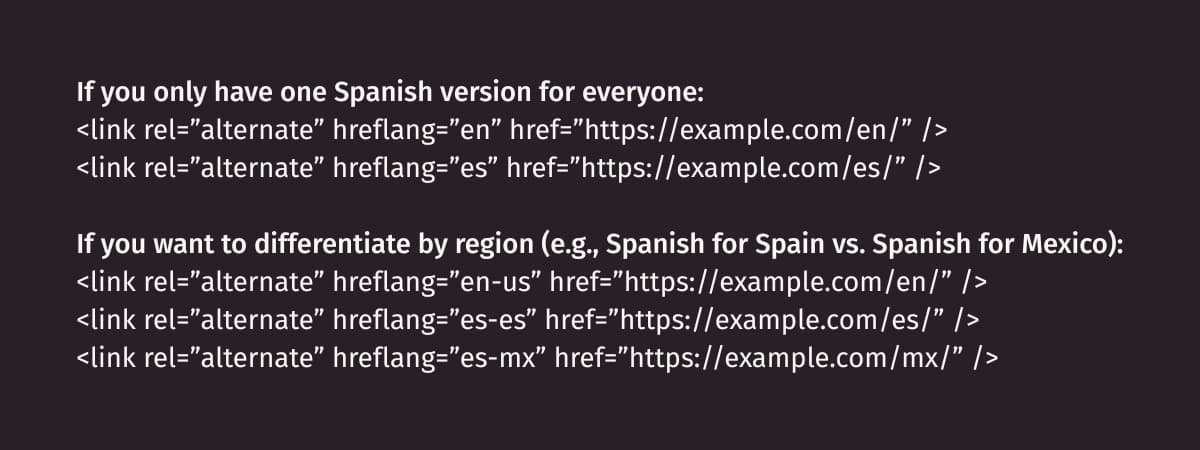
This ensures someone in Mexico sees your Spanish-MX page, while someone in Spain sees your Spanish-ES page.
So, in simple terms: each language (and region) needs its own address, an easy way for users to switch, and clear labels for Google. That way, people always land on the version of your site that feels right for them.
Step 5 – Optimize for SEO
This step is where most of the businesses struggle. Building a multilingual website is one thing; making it rank in global markets is another.
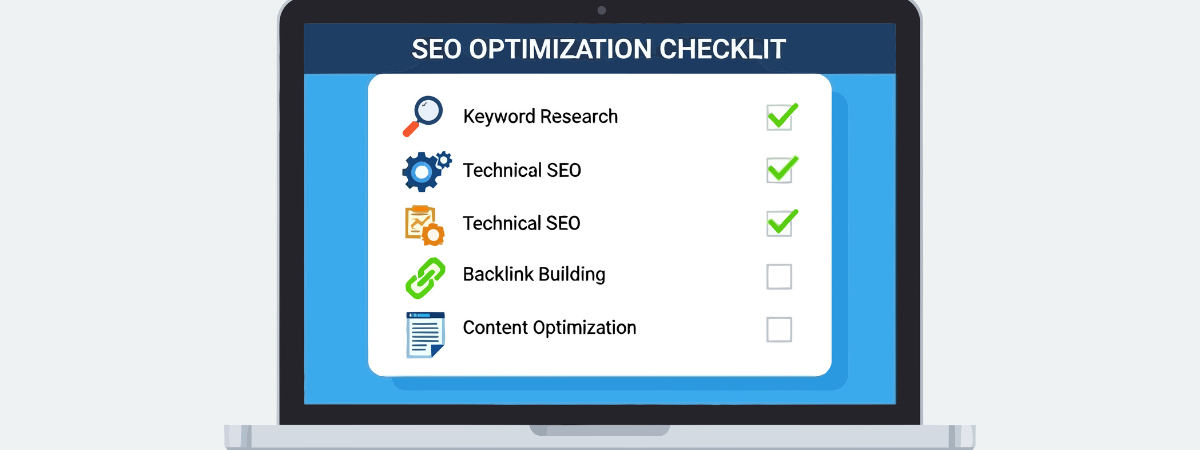
- Local Keyword Research: Instead of translating English keywords, research what users search in each language.
- Localized Metadata: Title tags, meta descriptions, and image alt text must be unique for every language version.
- Backlinks: Gain authority by being featured in regional directories, blogs, and industry media.
Multilingual SEO can be complex, but you don’t have to tackle it alone. SMBGM’s multilingual SEO team helps SMBs rank across multiple countries with customized strategies that drive visibility, leads, and conversions. Reach out to learn how we can tailor a strategy to your audience.
Step 6 – Test, Launch, and Monitor
Before going live, make sure your multilingual website is technically sound and search-ready.
Pre-launch checklist:
- Language switchers work correctly and are easy to find
- Hreflang tags are properly implemented and validated
- All localized pages are crawlable and indexed
After launch, monitor performance:
- Track traffic by region and language
- Measure conversions for each language version
- Identify high-ROI markets and top-performing content
- Use AI-powered analytics to refine messaging and UX by location
At SMBGM, we support clients beyond launch, offering ongoing optimization that keeps your multilingual website performing at its best, across languages, markets, and search engines.
What Our Clients Say
“Thank you for this collaboration on the creation of our multilingual website. It was a real time-saver from the start, as they were already familiar with our field of work (FLAM French courses). Your responsiveness and guidance throughout the project were greatly appreciated.”
— Emmy Galmiche
Ready to expand your reach? Learn how to make a multilingual website that connects with diverse audiences and increase your global presence. At SMBGM we’re here to guide you through every step, ensuring your site is not only visually appealing but also optimized for search engines. Don’t wait, let’s get started on your multilingual journey today!
Frequently Asked Questions (FAQs)
What is a multilingual website?
A multilingual website is a site that offers content in more than one language, so visitors can read and interact in the language they’re most comfortable with. This helps businesses connect with more people around the world and makes the website feel more welcoming and trustworthy.
What is the best approach to creating a multilingual website?
The best approach is to use a flexible platform that supports multilingual SEO and growth. WordPress is the most common choice because it allows dedicated URLs for each language, proper use of hreflang tags, and easy scalability. Website builders like Shopify or Webflow can work too, but they often rely on third-party apps and have more SEO limitations.
How do I determine which languages to add to my website?
Start by analyzing your audience. Use tools like website analytics, customer inquiries, or competitor research to see which regions or languages show the most demand. Then, consider market opportunities that align with your business goals. Focus on the languages that can give you the best return on investment, like Spanish for Latin America or German and French for Europe.
How do you handle multilingual SEO / localization on your website?
We approach multilingual SEO as a full strategy. This means conducting market and language research, performing localized keyword analysis, translating and localizing all content and metadata, optimizing technical SEO like hreflang tags and domain structure, and building local backlinks to boost authority.
You can dive deeper into our approach in this article: Why Multilingual SEO Matters in a Global Market













 English
 Español