When you want your business to be discovered online, two strategies usually come up: Search Engine Optimization (SEO) and Pay-Per-Click advertising (PPC). Both have the same end goal which is getting your business in front of the right people, but they work in very different ways.
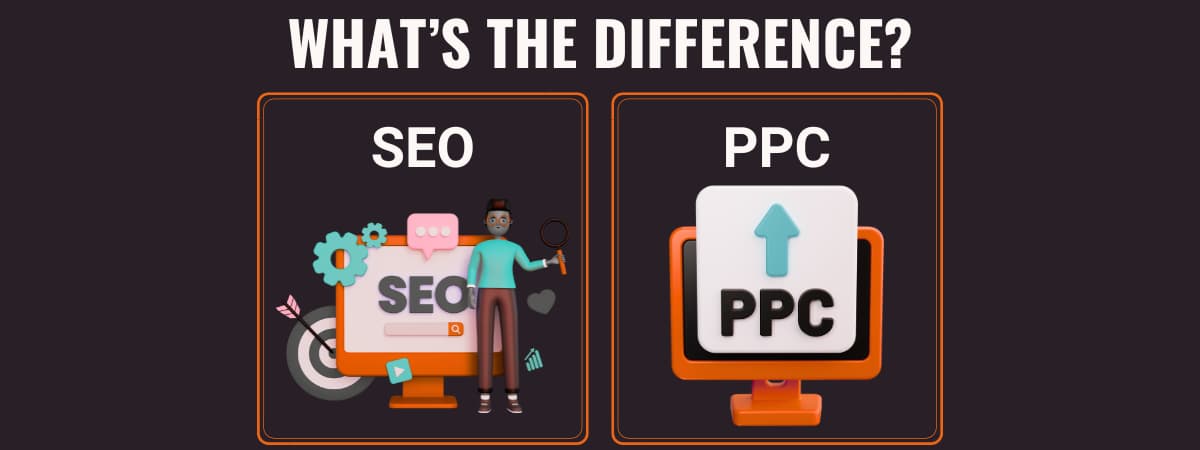
SEO is about earning your way to the top of search results organically, while PPC is about paying for immediate visibility. Think of it this way: PPC is a sprint—fast, focused, and results-driven—while SEO is a marathon—strategic, steady, and built for long-term success. Each has its benefits, drawbacks, and strategies. The challenge for many organizations is knowing when to rely on one, the other, or a smart combination of both.
This guide breaks down SEO vs PPC in detail – how they work, what makes them valuable for small to mid-sized businesses, and when to use them. By the end, you’ll have a clear picture of which strategy fits your business goals best.
Let us help you build your brand’s online presence with a stunning website and content that connects. Schedule your free call today!
What Is Search Engine Optimization (SEO)?
Search Engine Optimization, commonly shortened to SEO, is the process of making your website more visible in organic (non-paid) search results. In simple terms, it’s about showing up when people search for products, services, or information related to your business.
That’s why ranking high matters. If your business isn’t visible on page one, chances are potential customers won’t find you.
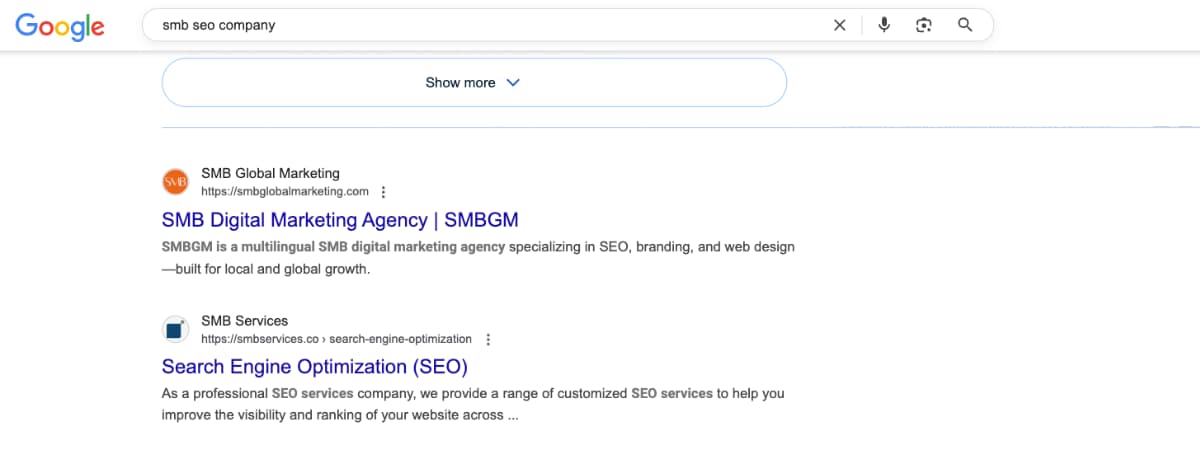
SEO is all about aligning your website and online presence with what search engines (and users) are looking for.
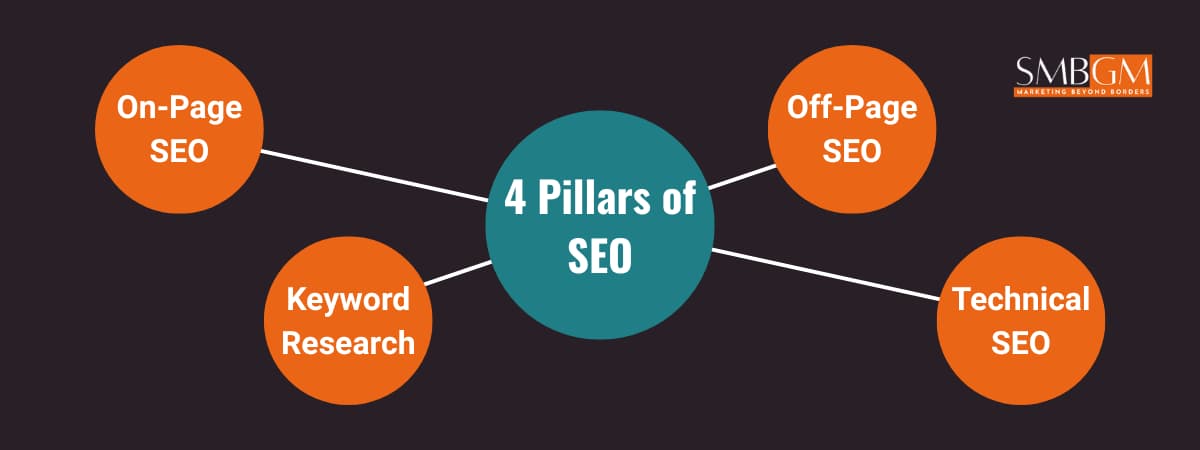
The Four Pillars of SEO
- Keyword research – Finding the terms your audience is searching for.
- On-page SEO – Optimizing content and pages around those terms.
- Off-page SEO – Building authority and reputation through backlinks and mentions.
- Technical SEO – Ensuring search engines can crawl, index, and understand your site.
What’s new in 2025:
While these pillars remain the foundation, today’s SEO success also depends on:
- AI and GEO Optimization – Using AI-powered insights to uncover search intent and refine your content so it performs well across generative AI platforms and answer engines.
- Stronger trust signals (E‑E‑A‑T) – Expertise, Experience, Authority, and Trustworthiness are more important than ever.
- Topical authority – Demonstrating comprehensive coverage on your subject to rank higher in your niche.
- Content freshness – Regularly updating pages to signal relevance and current information to search engines.
- Structured data – Using schema markup to help search engines understand your content and improve rich result eligibility.
By combining the core pillars with these 2025 trends, businesses can stay competitive and increase their visibility in an evolving SEO landscape.
Benefits of SEO
- Builds Organic Traffic – SEO helps attract people who are actively searching for what you offer. Once your site ranks, you can receive consistent visitors without paying for every single click.
- Cost-Effective in the Long Run – Unlike PPC, where you pay each time someone clicks, SEO doesn’t charge you per visitor. It may take an upfront investment of time, tools, or expertise, but over time it becomes a more affordable way to generate traffic.
- Boosts Trust and Credibility – Consumers often trust organic results more than ads. Ranking high without a “sponsored” tag tells potential customers that you’re a valid authority in your space.
- Sustainable Growth – With strong SEO, your visibility doesn’t vanish overnight. A well-optimized page can continue to bring in traffic for months and even years, after it’s published.
Drawbacks of SEO
- Slow Results – SEO isn’t instant. It takes months before you see significant traffic or reach the top of the SERP.
- Competitive Keywords – If you’re targeting highly popular keywords, you’ll be competing against big players with larger budgets and established authority.
- Algorithm Changes – Search engines like Google constantly update their ranking algorithms. What works today might not work tomorrow, meaning you need to adapt and update regularly.
- Time and Effort Intensive – SEO requires consistent effort, from creating fresh content to optimizing existing pages and analyzing performance. For small businesses with limited resources, this can feel overwhelming.
What Is Pay-Per-Click (PPC)?
Pay-Per-Click advertising (PPC) is exactly what it sounds like: you pay every time someone clicks on your ad. These ads usually appear at the very top of search results, above organic listings, with a small “sponsored” tag.
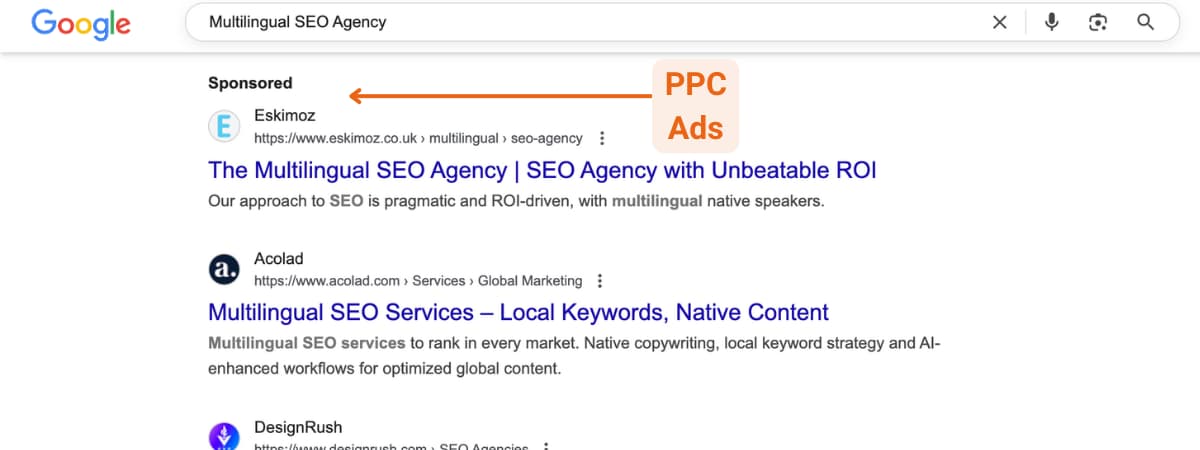
Because you’re paying for placement, PPC can generate traffic instantly, no months-long wait like SEO. But success depends on two things:
- Your bid (how much you’re willing to pay compared to competitors).
- Your ad quality (Google considers relevance and click-through rate, not just money).
Once someone clicks your ad, they land on a dedicated landing page. The effectiveness of that page determines whether the click turns into a customer.
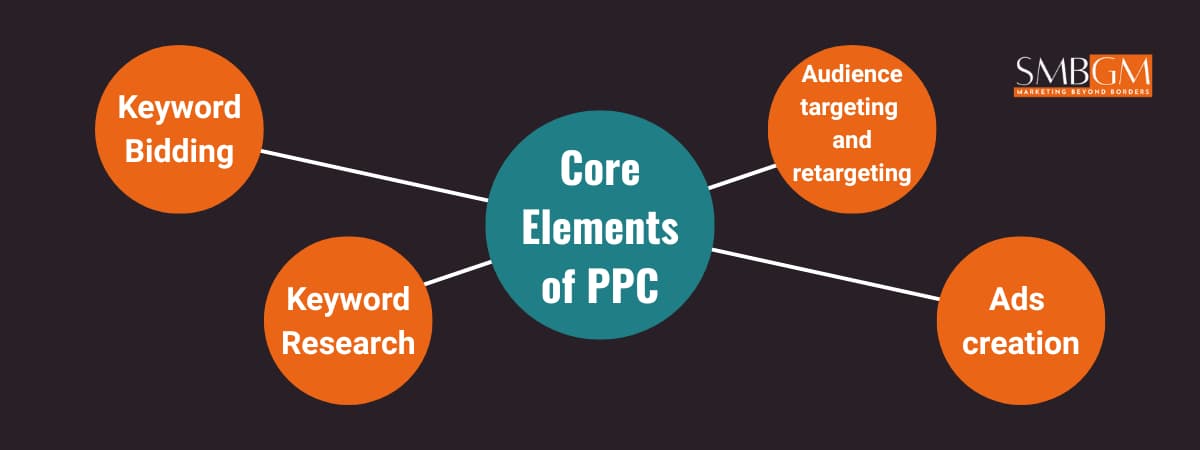
Five Core Elements of PPC
- Budgeting – Setting a daily or monthly ad spend to control costs.
- Keyword research – Finding commercial-intent keywords to target.
- Keyword bidding – Setting how much you’re willing to pay per click.
- Audience targeting & retargeting – Reaching specific groups of people.
- Ad creation – Crafting ads that grab attention and drive clicks.
Benefits of PPC
- Fast Results – Want traffic fast? PPC is your answer. As soon as your campaign is live, your ads can appear in search results and start driving visitors.
- Targeted Reach – With PPC, you can target specific demographics, locations, devices, and even times of day. You’re not just reaching more people, you’re reaching the right people.
- Guaranteed Visibility – Your ad sits right at the top of the SERP. Even if users skip ads, your brand name still gains exposure.
Drawbacks of PPC
- Expensive Over Time – Unlike SEO, where traffic keeps coming once you rank, PPC requires ongoing spending. The more competitive your industry, the higher the cost per click (CPC).
- No Guarantee of Profit – Paying for clicks doesn’t mean paying for customers. Some users may click without buying, which can make campaigns costly without a solid conversion strategy.
- Temporary Results – The moment you stop paying, your visibility disappears. PPC is like renting space on Google – once the rent isn’t paid, the ad is gone.
- Competitive Bidding – High-demand keywords often spark bidding wars. Larger businesses with deeper pockets may consistently outbid smaller players.
When to Use SEO vs PPC
Go with SEO if:
- You’re on a tighter budget
- You’re planning for long-term, sustainable growth
- You want to build trust and authority in your space
- Your audience is searching for detailed information or educational content
Choose PPC if:
- You need traffic and results right away
- You’re launching a new product or service
- You’re promoting something time-sensitive (like an event or sale)
- You want to push people to a specific landing page
Pro tip: The smartest businesses don’t think of it as “SEO vs PPC.” Instead, they blend both strategies depending on their goals, timeline, and budget.
SEO vs PPC Comparison
| Feature | SEO | PPC |
|---|---|---|
| Cost | No cost per click; investment in content and SEO services | Pay per click; ongoing ad spend required |
| Results Timeline | 3–6 months to start building momentum | Immediate visibility once ads are live |
| ROI | Long-term, compounding over time | Short-term; stops when budget ends |
| Visibility | Organic listings | Paid ads at top/bottom of SERPs |
| Targeting | Keyword relevance, intent | Keywords + demographics + location + device |
| Click-Through Rate (CTR) | Higher for top-ranking organic results | Moderate CTR; depends on ad quality |
| Trust | Builds authority and credibility | Users may skip ads; lower trust |
| Scalability | Slower but sustainable | Fast but expensive to scale |
| Measurability | Requires analytics over time | Highly measurable in real-time |
| Keywords | Long-tail, informational, and evergreen | Transactional and competitive |
Why SEO Is Better Than PPC
SEO offers several advantages over PPC. For nonprofits, schools, healthcare practices, and SMBs working with limited resources, SEO offers:
Cost efficiency – No per-click costs, long-term traffic grows without ongoing ad spend.
Higher CTR – Users trust organic results more than paid ads.
Brand credibility – Ranking organically signals expertise and reliability.
Evergreen traffic – Well-optimized pages continue to attract visitors for months or years.
Is PPC or SEO More Measurable and Quantifiable?
PPC is highly measurable: You can track impressions, clicks, conversions, and ROI in real-time.
SEO is measurable too, but results are more gradual: Traffic, rankings, engagement metrics, and backlinks reveal performance over time.
Integrating SEO and PPC Strategy
The most effective approach isn’t SEO vs PPC, it’s SEO + PPC. Here’s how small and mid-sized businesses can combine them:
- Maximize visibility – Engage with top organic results and run PPC ads for the same keywords.
- Data sharing – Use PPC data to identify high-performing keywords for SEO.
- Content promotion – Boost high-performing SEO content with PPC campaigns.
- Retargeting – Serve ads to users who visited organically but didn’t convert.
- Landing page optimization – Improve user experience and conversion rates for both organic and paid traffic.
Conclusion
SEO and PPC aren’t rivals, they’re two powerful tools with different strengths.
For SMBs, the right mix depends on your goals, budget, and timeline. Most succeed by balancing both, leveraging SEO for sustainable growth while using PPC for fast visibility and campaign pushes.
Together, they create a stronger, more resilient digital marketing engine that keeps your brand in front of the right people at the right time.







 English
 Español